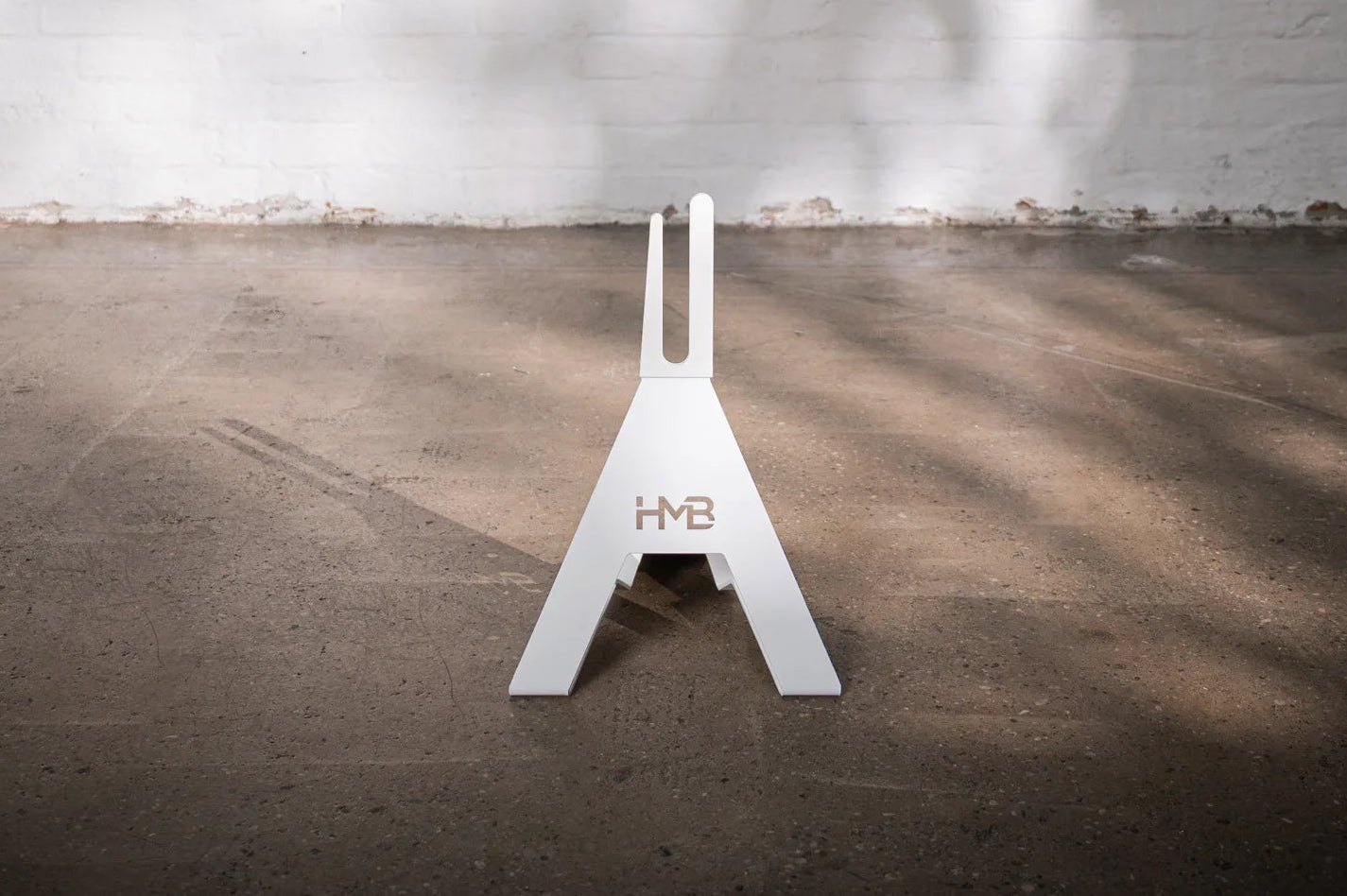
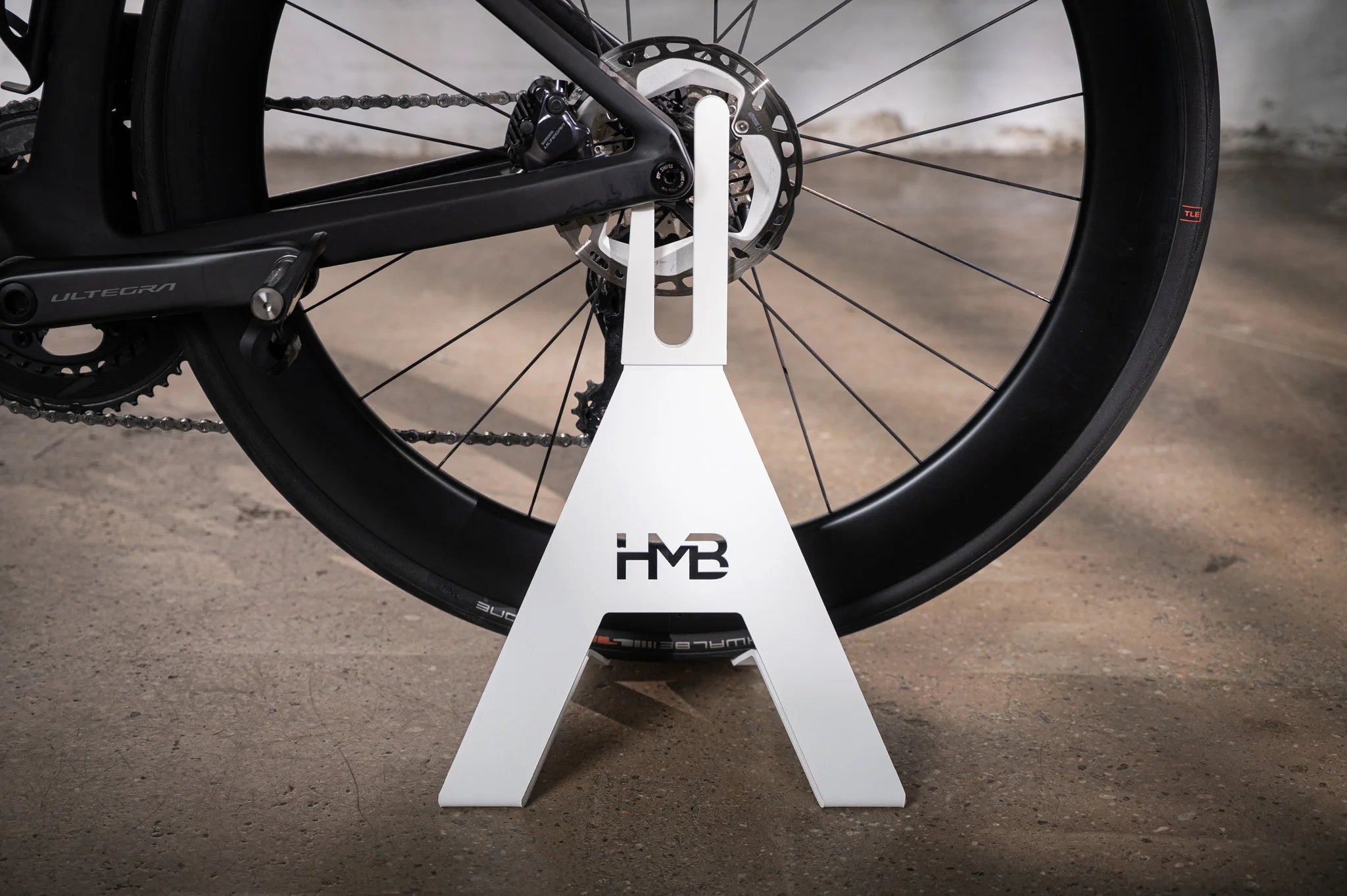
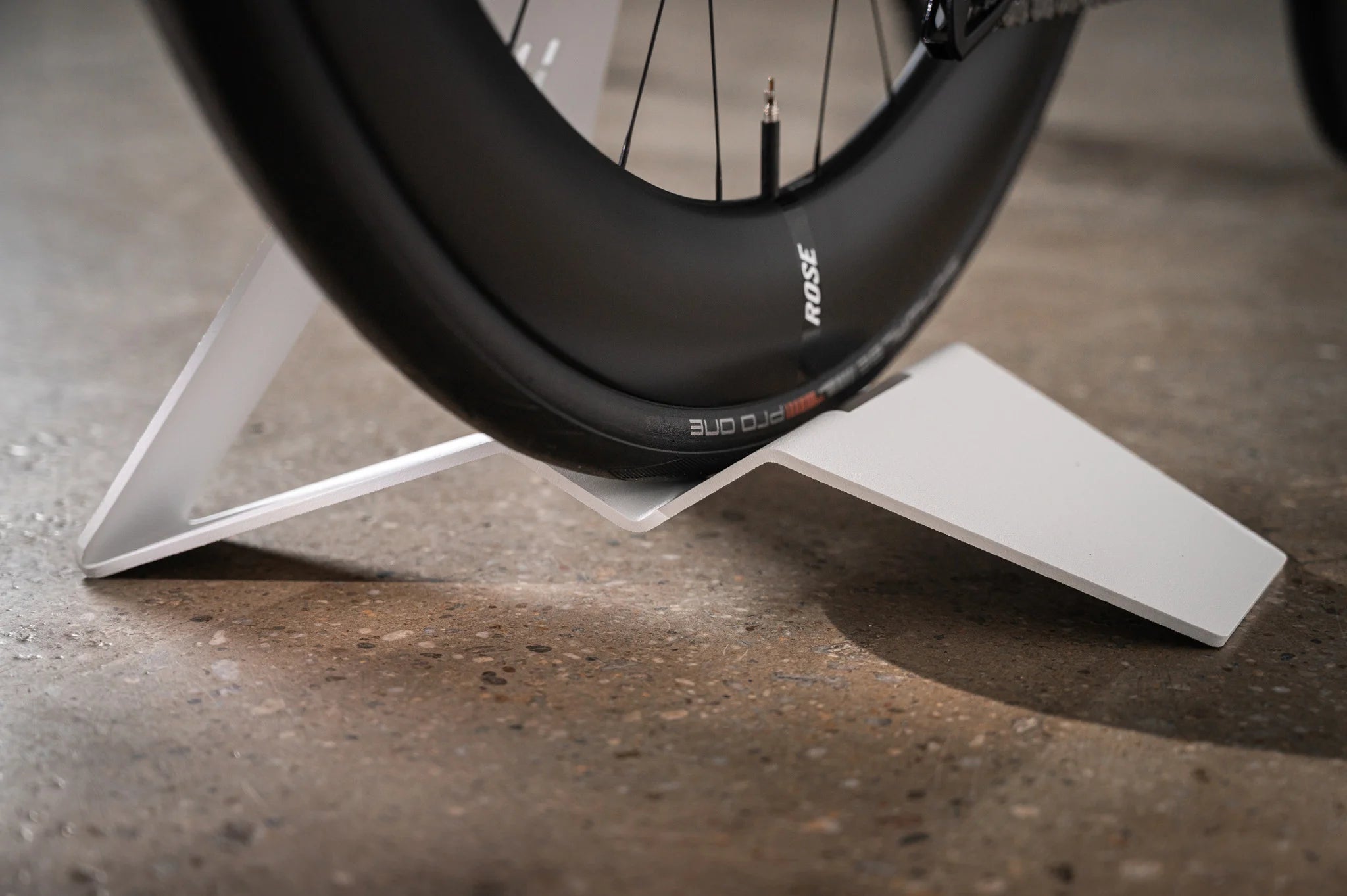
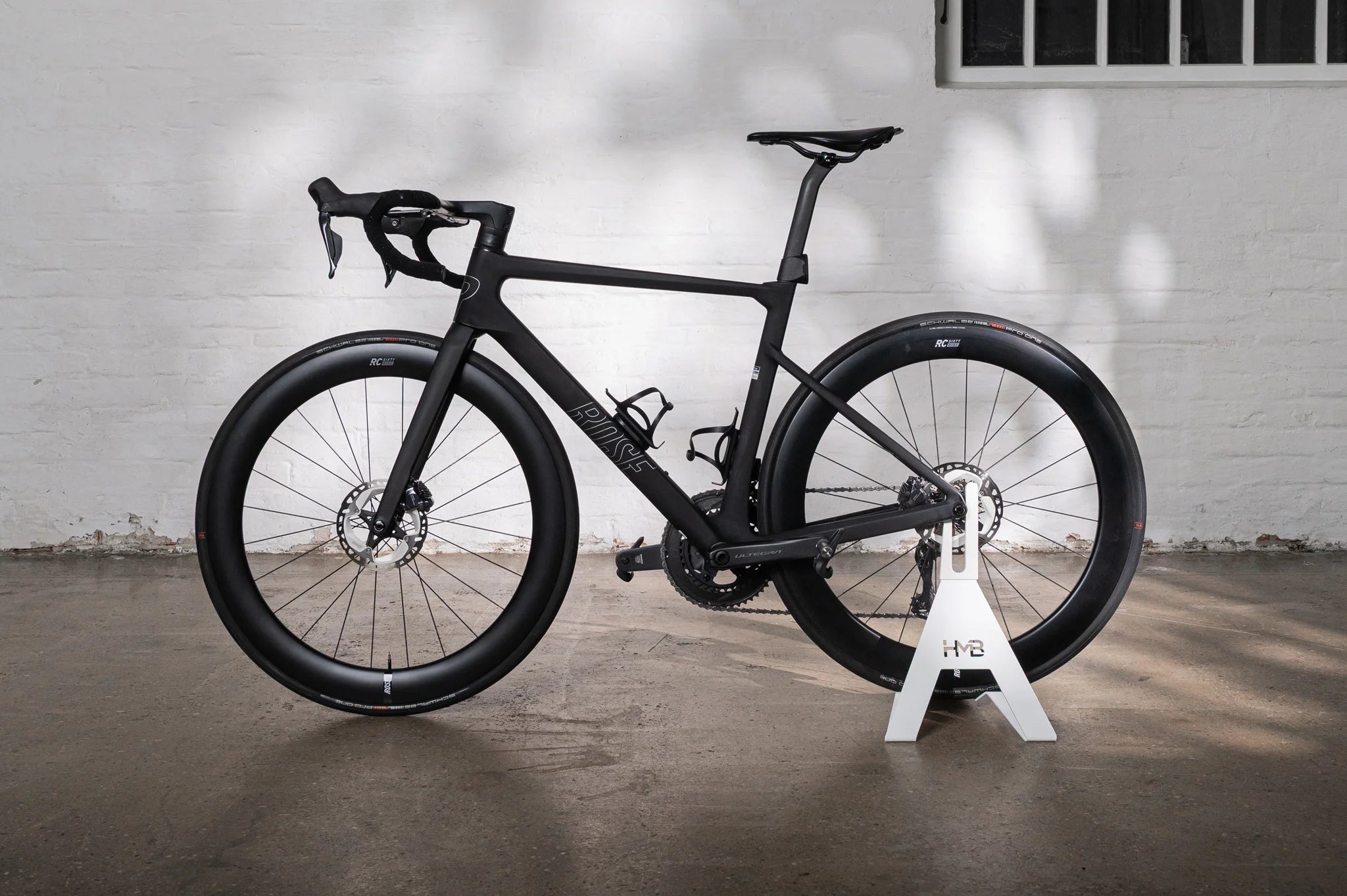
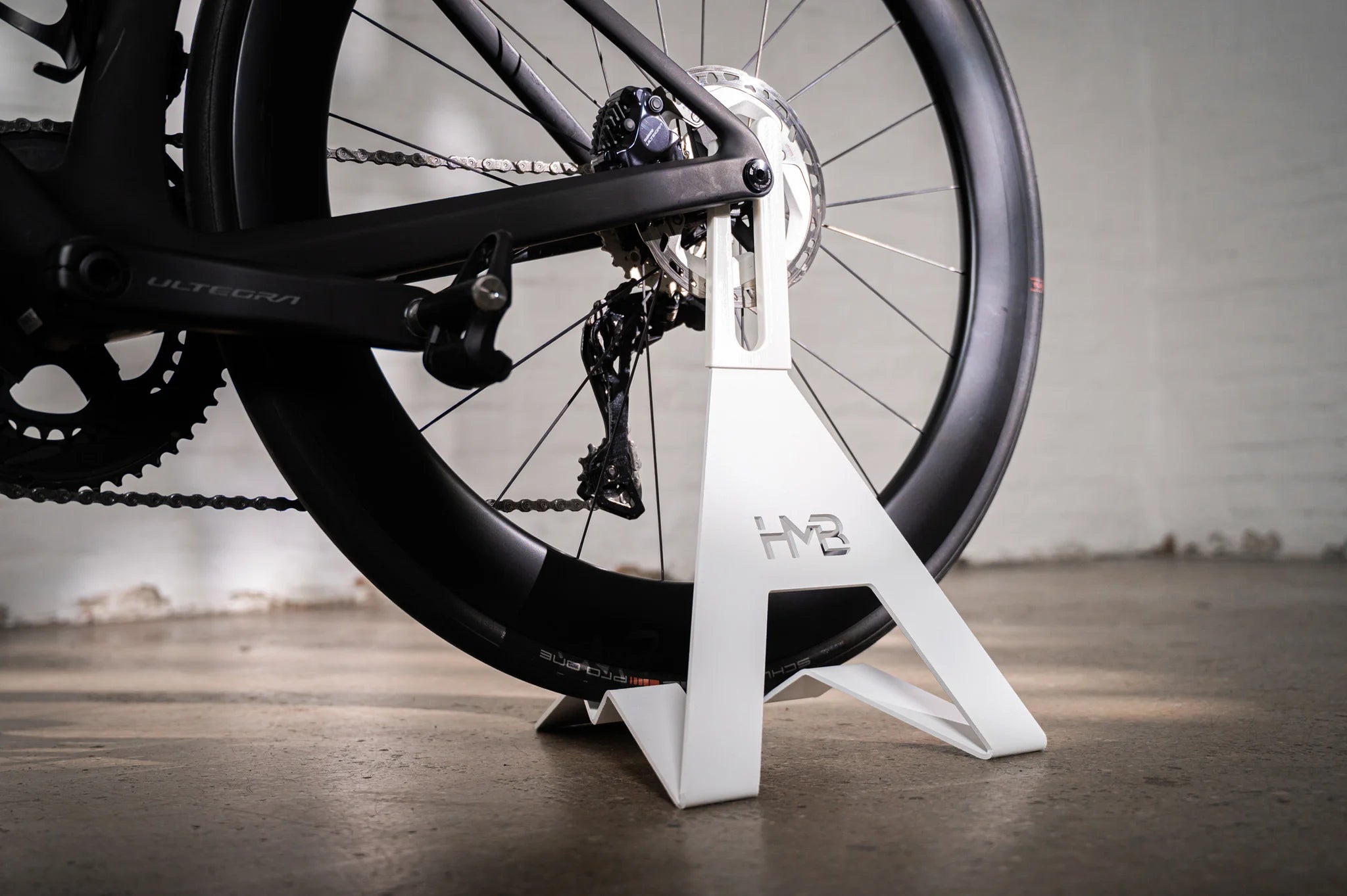
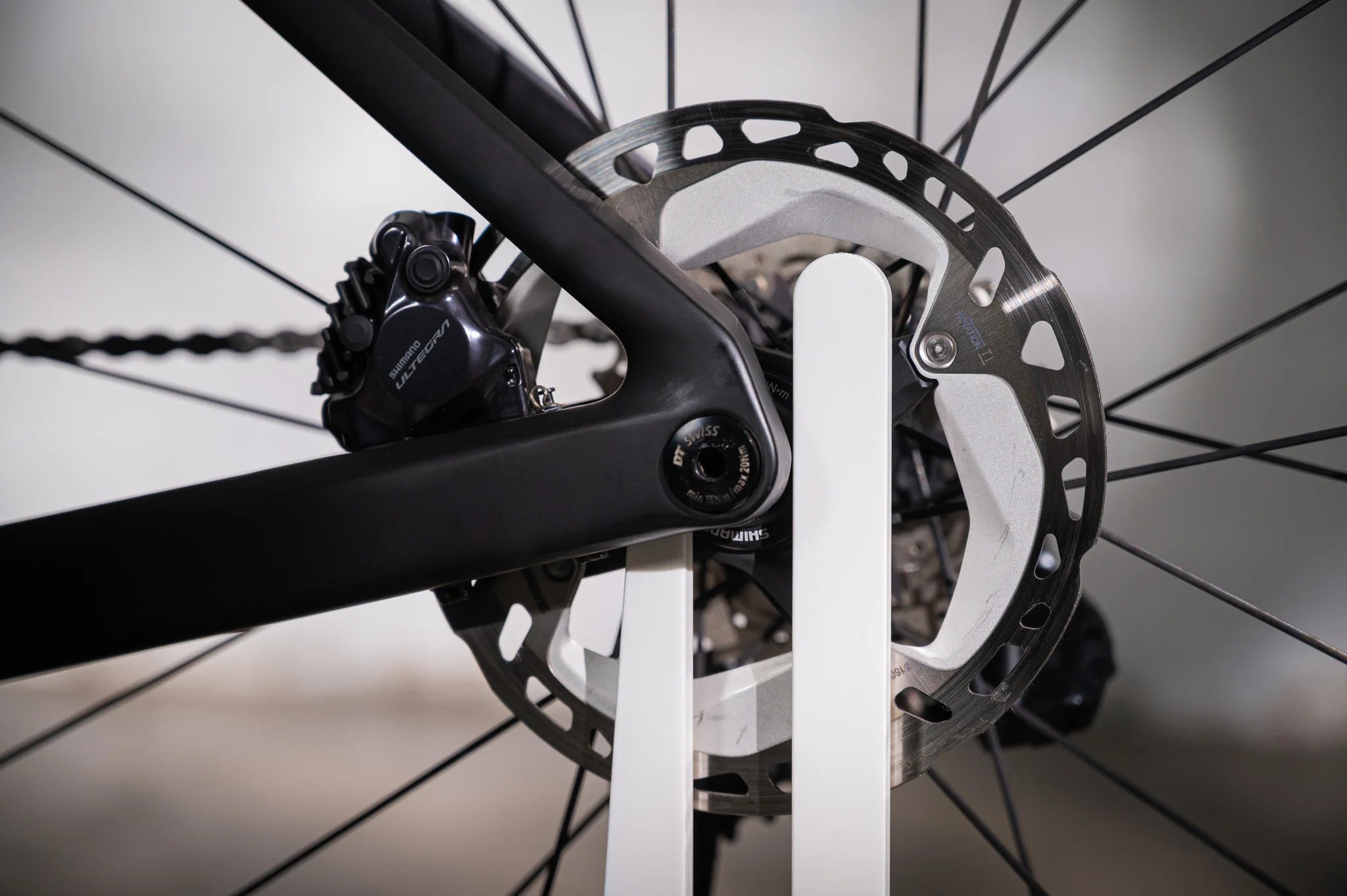
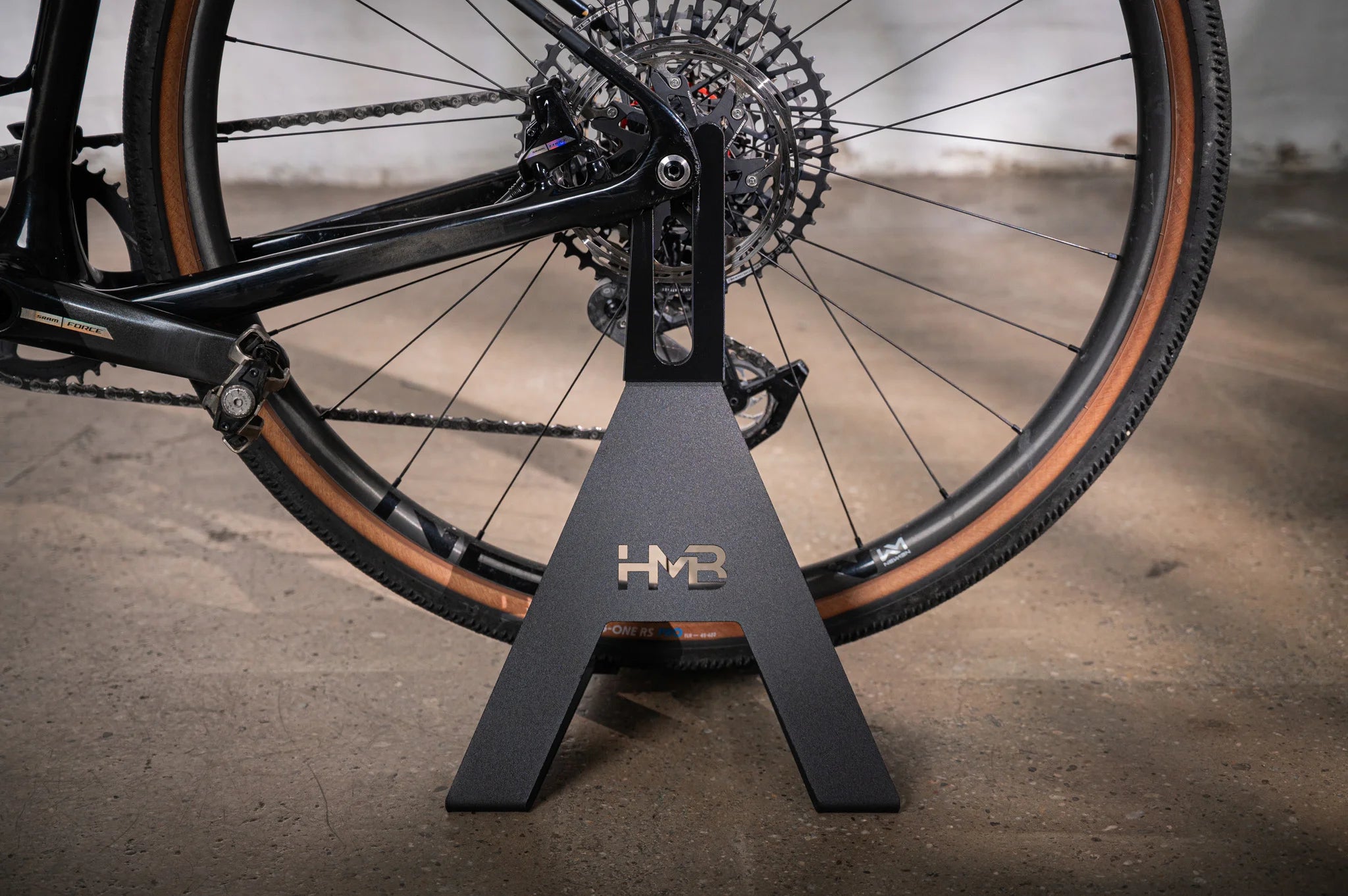
The strongest bike mount in the world is only as good as the four screws holding it up, and the wall behind them. It's the part almost everyone glosses over, and it's the part that actually decides whether your bike stays on the wall or ends up on the floor.
So before you drill a single hole, the real job is working out what your wall is made of. It changes everything that follows: the fixings you buy, the drill you reach for, and, in one case, whether you can safely hang a bike there at all. Here's how to do it properly for each type of wall.
// Start here: what is your wall actually made of?
Give it a knock. A solid masonry wall answers with a dull, flat thud; a plasterboard wall sounds hollow and drum-like. That one test tells you which half of this guide you're in.
Solid masonry, brick, concrete, building block, is the best case for a heavy bike. Plasterboard isn't really a wall in structural terms; it's a board, and the question that matters is what sits behind it. Work that out before you buy a single fixing, because the wrong plug in the wrong wall is the most common reason a mount fails.
One non-negotiable step first, though: check for hidden cables and pipes before you drill. Electrical cables tend to run vertically and horizontally from sockets and switches, and a water pipe behind the plaster will ruin your day. An inexpensive detector is worth every cent, never drill blind, especially near a socket, switch or radiator.

// Solid masonry: brick, concrete and block
This is the easy, strong case. A solid masonry wall is load-bearing and will hold a bike, e-bike included, with plenty of margin to spare.
The method is straightforward: a hammer drill with a masonry bit sized to the plug, drilled to depth, dust cleared from the hole, the plug tapped in flush, and the screw driven home. The plugs and screws supplied with a decent mount are made for exactly this.
Two masonry walls do need a moment's thought, though. Aerated concrete, the light, pale, slightly crumbly blocks common in newer builds (Ytong and similar), is soft enough that ordinary plugs can pull straight out under load. It needs dedicated aerated-concrete screw anchors. And perforated or hollow brick, riddled with voids, needs a plug that grips the solid webs between the holes, or a resin injection anchor for a heavy bike. If your masonry isn't solid, dense and reassuring, match the fixing to it rather than trusting the standard plug.
// Plasterboard: it's all about what's behind it
Here's the honest warning first, because it's the single most important line in this guide: plasterboard on its own will not hold a bike. The little plasterboard plugs rated for a picture frame are nowhere near a 10-to-25-kilo bike that also gets pulled, jostled and swung on and off the wall daily. For anything with a bike hanging on it, you fix into something solid behind the board, never the board alone.
// There are three things you might find back there:
Timber or metal studs. The strong, simple answer. Find the stud with a stud finder, they're usually at 400 or 600 mm, and drive your screw straight into the timber. A stud will hold a bike happily. Plan the mount's position so its fixings land on a stud, rather than hoping one happens to be in the right place.
Masonry behind a gap (dot-and-dab). Where plasterboard is dabbed onto a masonry wall with adhesive, there's an air gap between the board and the brick. Here you need a fixing long enough to reach and anchor into the masonry behind, or purpose-made dot-and-dab fixings, the board itself carries nothing.
A genuine cavity. If it really is hollow, use heavy-duty metal cavity anchors, spring toggles or similar, rated well above your bike's weight, and stay comfortably within that rating. For a heavy e-bike, though, be honest with yourself and find a stud or the masonry instead. Hollow-wall anchors are a last resort for a bike, not a first choice.
// Timber and stud walls
Screwing directly into solid timber, an exposed stud, or a wooden wall in a shed or garage, is one of the strongest, most forgiving fixings there is. The only thing to get right is making sure the screw is biting properly into the timber rather than just the board or cladding over it. Use wood screws of a sensible length and it'll hold without drama.
// Getting it straight and secure
Whatever the wall, a few habits make the difference between a solid job and a wonky one. Use the HMB Easy Mounting System that comes with the mount so the holes are correctly spaced and the mount lands level, a good mount includes one precisely so you don't have to measure by eye. Check it with a spirit level before you commit. Match the plug to the wall and the screw to the plug, and drive everything snug without overtightening, which just spins and strips the plug.

And keep in mind that a bike mount doesn't only hold a static weight. Every time you lift the bike on or off you pull on it, it swings slightly, and now and then it gets knocked, so you want fixings with a real safety margin over the bike's weight, not just barely enough to hold it standing still. That margin matters most with e-bikes, which is also why they belong on masonry or a stud and never on plasterboard alone.
// When to call someone
If you can't work out what your wall is, can't locate a stud, or simply aren't confident with a drill near cables and pipes, get a tradesperson in. A short paid visit costs far less than a dropped e-bike or a drilled-through water pipe, and there's no shame in it, a mount fitted properly once is a mount you never think about again.
// The bottom line
The mount is the easy part; the wall is the job. Identify what you're drilling into, fix into something solid, masonry or a stud, never bare plasterboard, check for cables and pipes first, and give yourself a margin. Do that, and the bike genuinely isn't going anywhere.
That's why every Hold My Bike mount ships with the HMB Easy Mounting System: the hardware and clear instructions for brick, concrete and timber-stud walls. The mount itself is engineered in 3 mm steel to hold far more than it needs to, your part is simply matching it to a solid fixing in a wall that can take it.
Greetings from Vienna.