Winter splits cyclists into two camps. There are those who ride straight through it on a scruffy winter bike, and those who retreat indoors to the turbo until the roads dry out. Either way, something ends up sitting still for months, the best bike, a rear wheel, sometimes a whole spare wheelset, and how you stash it now decides what condition it's in come spring.
So there are really two jobs here: putting a bike away properly, and keeping an indoor training setup from turning your spare room into an obstacle course. Neither takes long. Both are worth doing.
// Putting a bike away properly
If your good bike is going into hibernation while you ride something rougher or train inside, five minutes of prep saves you a grim discovery in March.
Clean and dry it first. Winter grime, and road salt in particular, is corrosive, leave it on and it quietly eats your drivetrain and finish over the off-season. Never lock away a bike that's dirty or damp. Give it a proper wash, dry it, and you've removed the single biggest cause of a bike ageing badly in storage.
Lube the chain and pivots. Bare metal left untouched for months will oxidise. A film of fresh lube on the chain keeps rust at bay, so it's the last thing to do before the bike goes up, clean chain, fresh lube, then leave it.
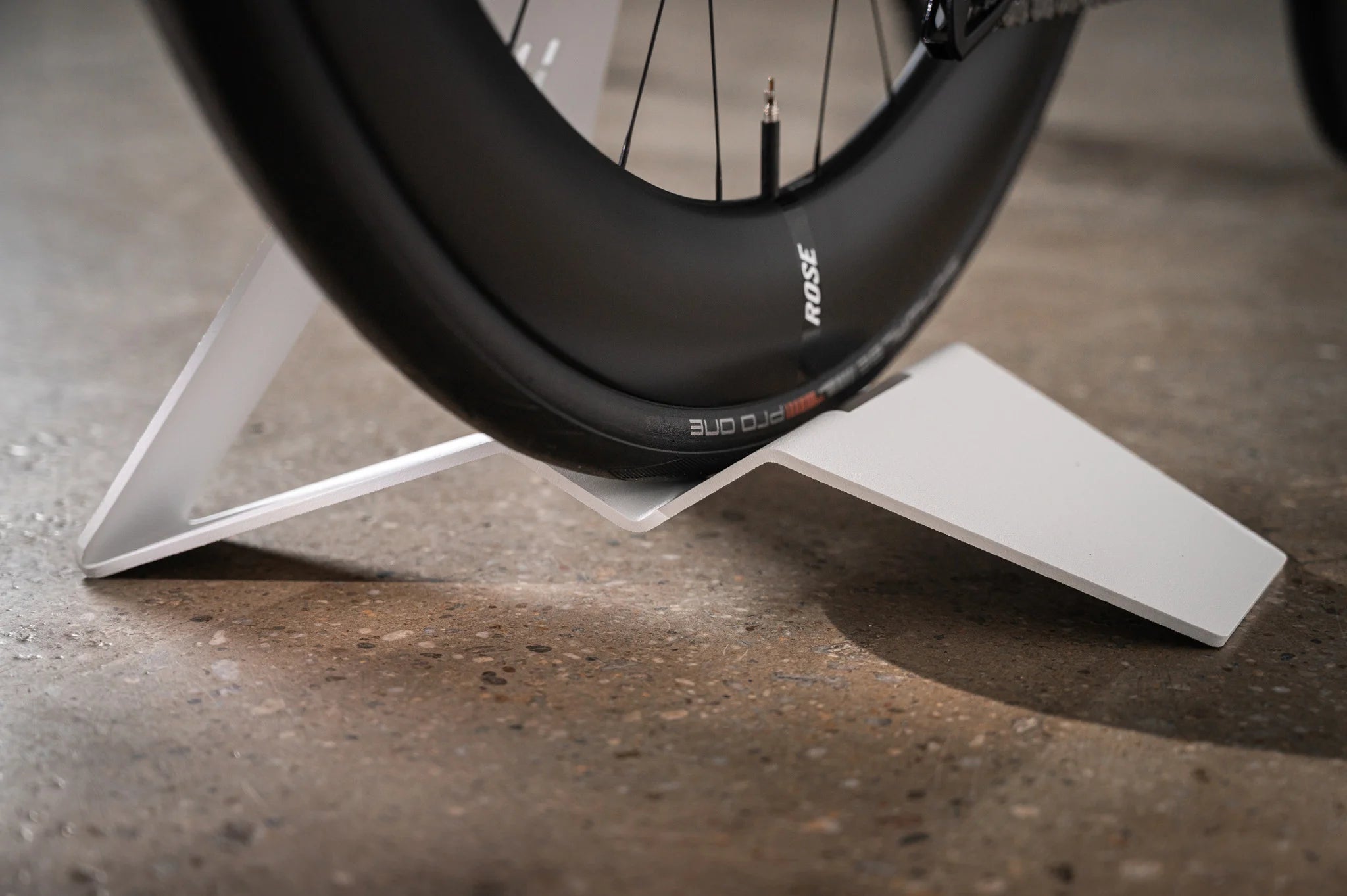
Take the weight off the tyres. A tyre left bearing the bike's weight in one spot for months can take a set, and tubes slowly lose pressure, latex especially. Hanging the bike on the wall removes the load entirely: no flat spots, and the tyres aren't sitting in a puddle of whatever's on the floor.
Get it off the floor, away from damp. Cold cellar and garage floors, and the walls beside them, hold moisture, and condensation in an unheated shed is worse still. Damp is what turns a quiet winter's rest into a spring restoration, it's unkind to steel bolts, to bearings, and to a carbon frame's finish alike. A dry, temperature-stable indoor wall is by far the kindest place for it.
Mind the e-bike battery. Don't store a lithium battery full or flat. Somewhere around half charge is the sweet spot, kept indoors, cool but not freezing, and topped up every month or so. We went into battery care properly in [our guide to storing an e-bike].
Keep it out of sight and secured. A bike sitting untouched for months is a soft target. Store it away from ground-floor windows, and lock it to something solid rather than trusting the door.
// The turbo-trainer problem nobody plans for
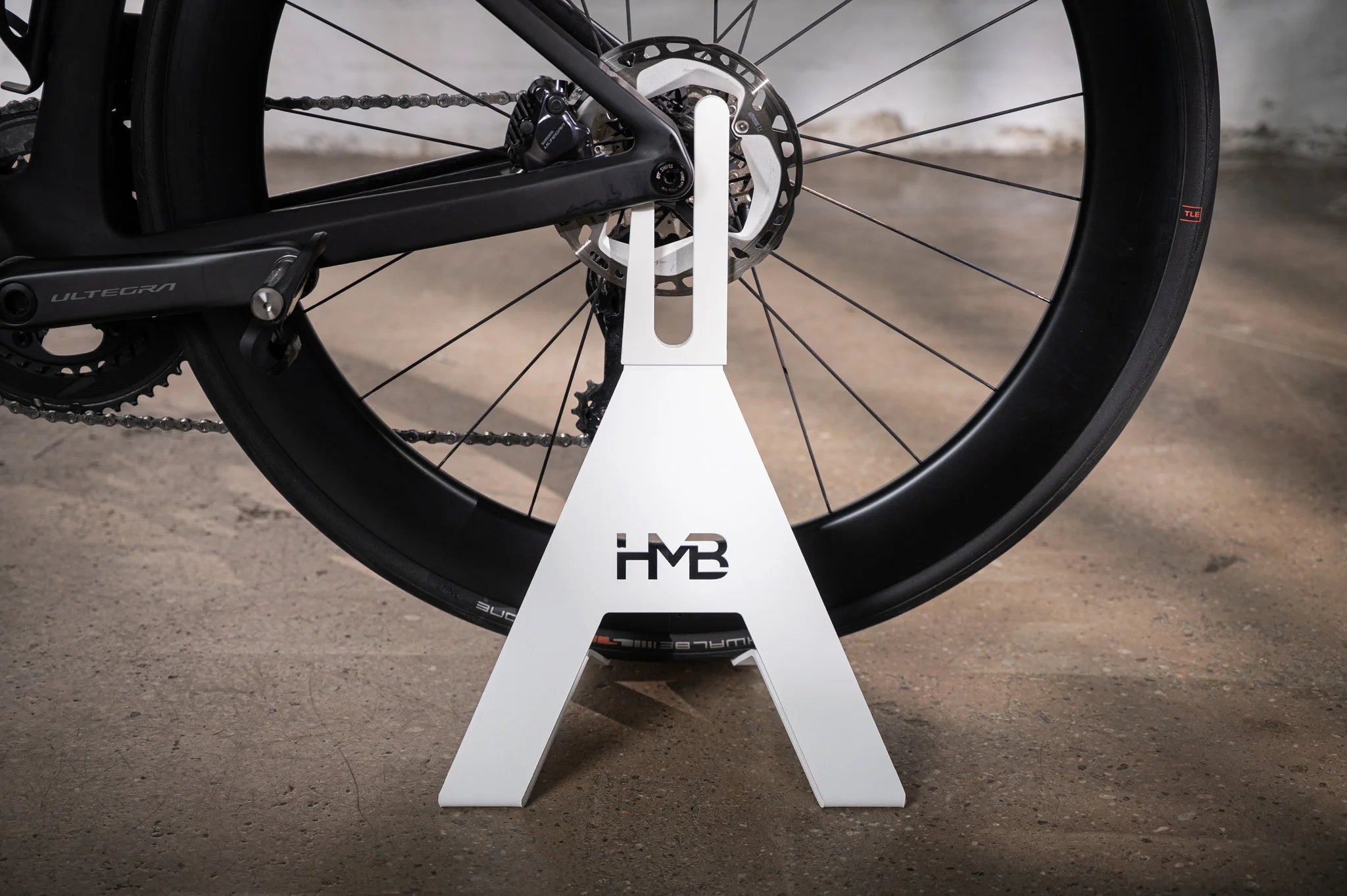
Move your training indoors and, on any modern direct-drive smart trainer, the very first thing that happens is the rear wheel comes off. Now you've got a wheel, often your good one, with an expensive cassette and a disc rotor, and nowhere sensible for it to live for the next four months.
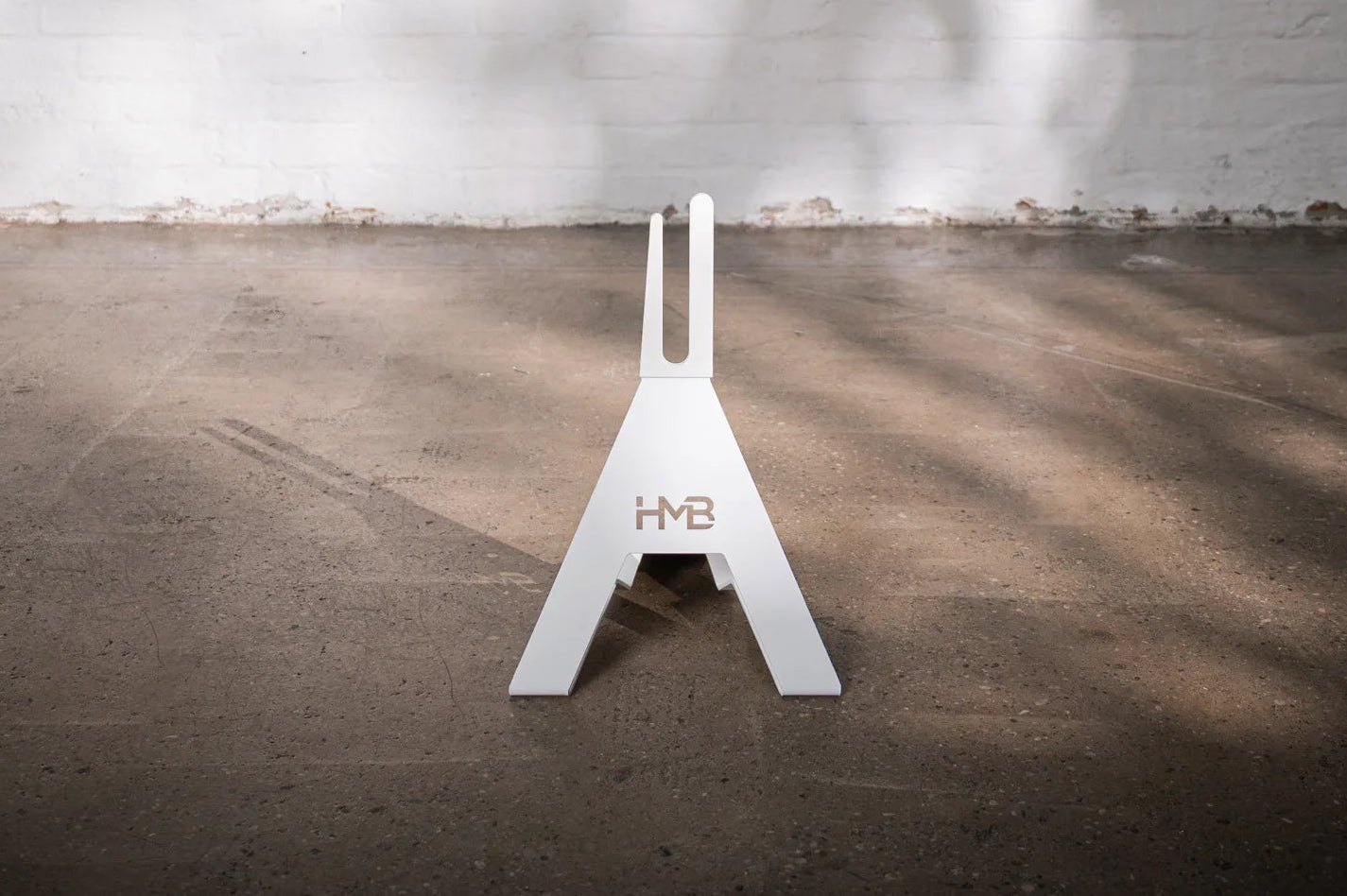
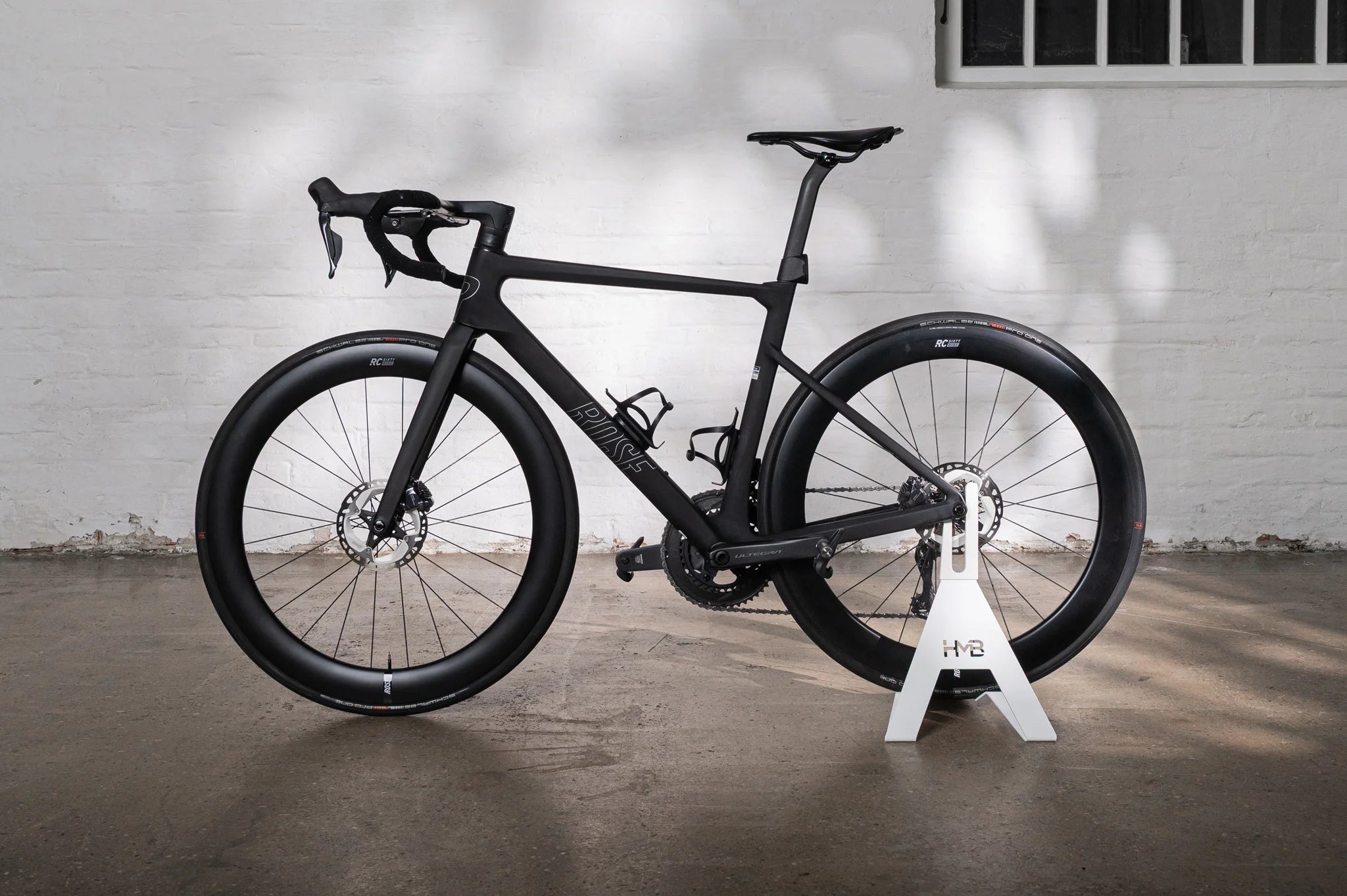
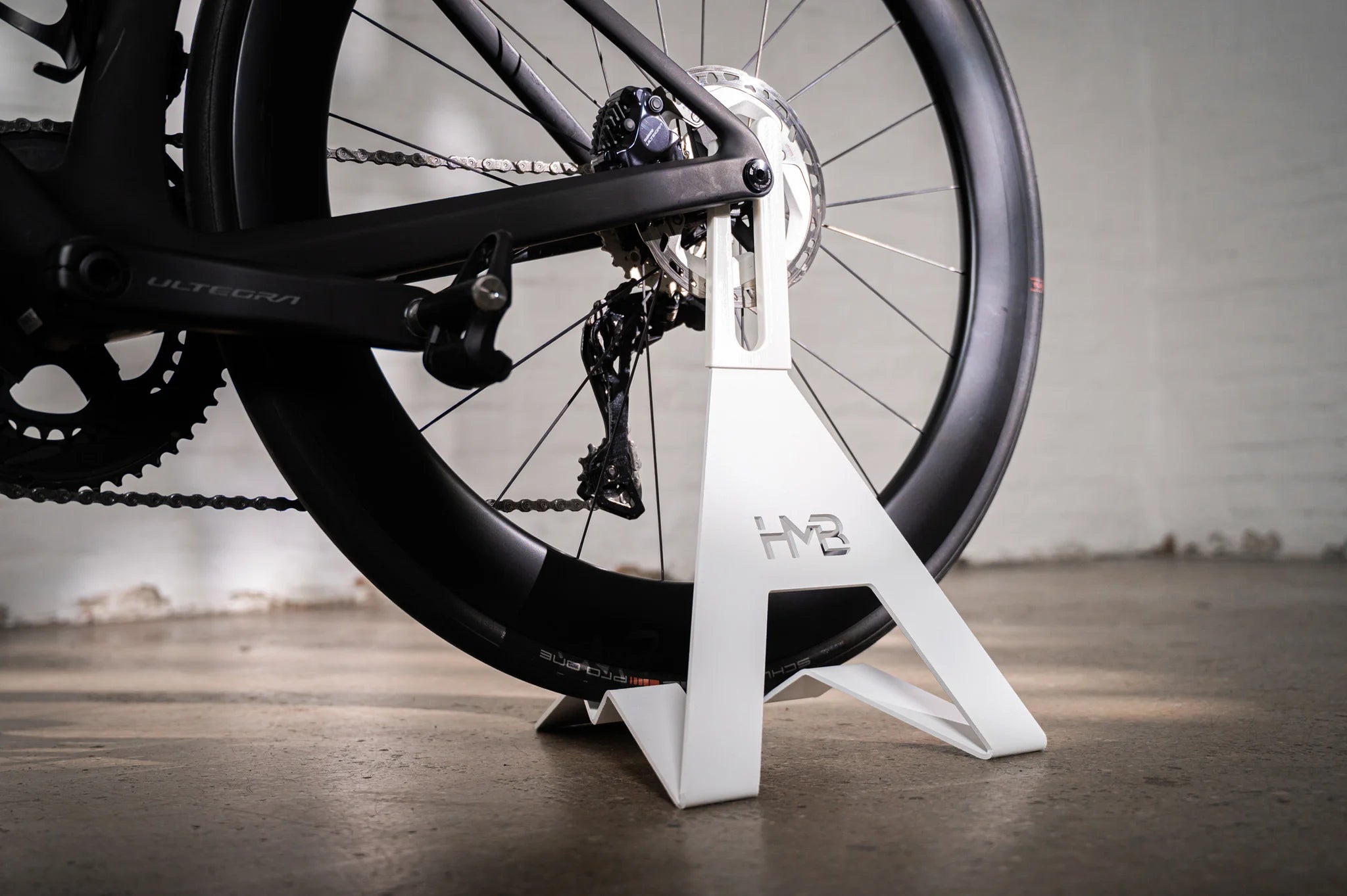
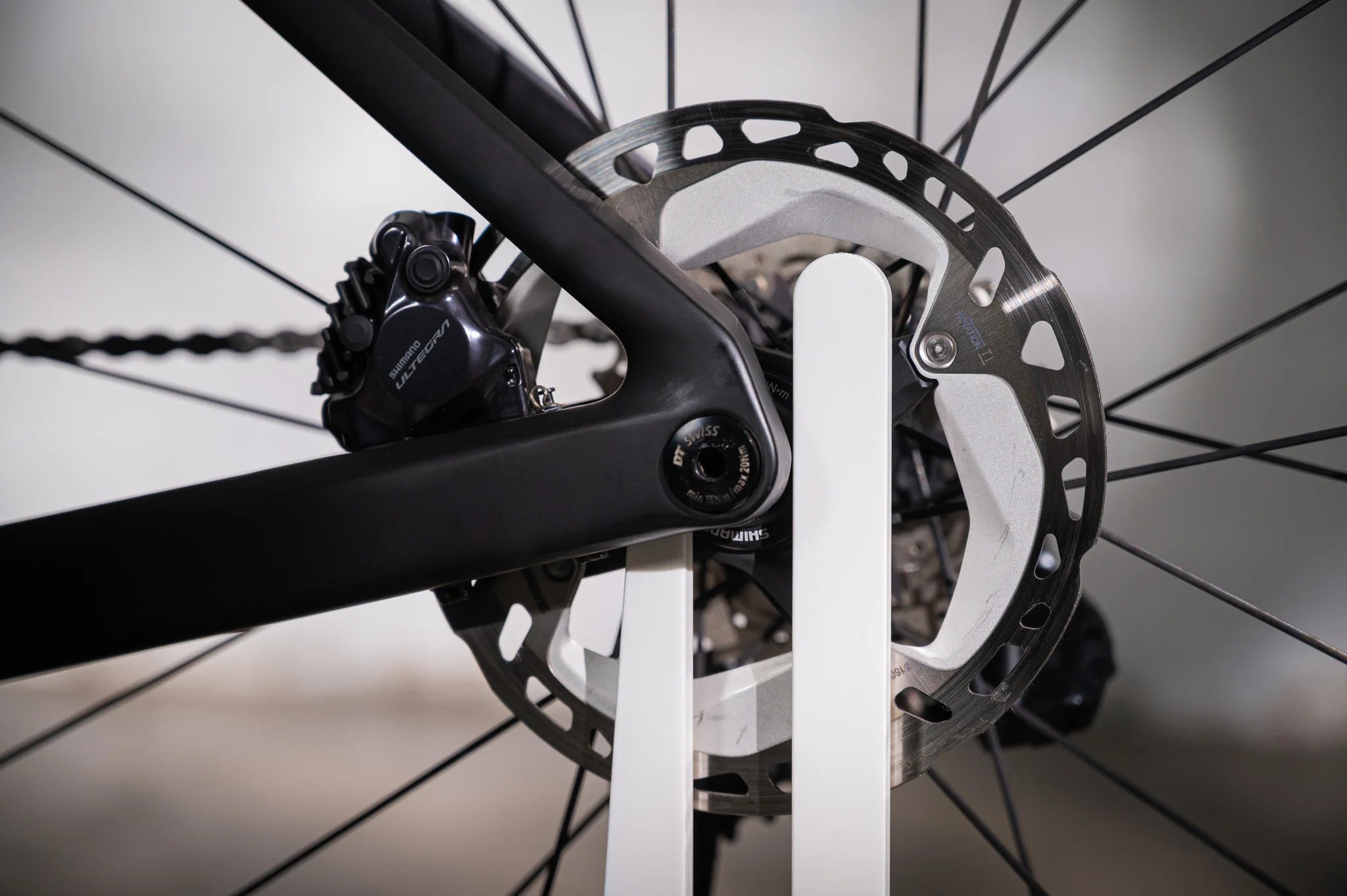
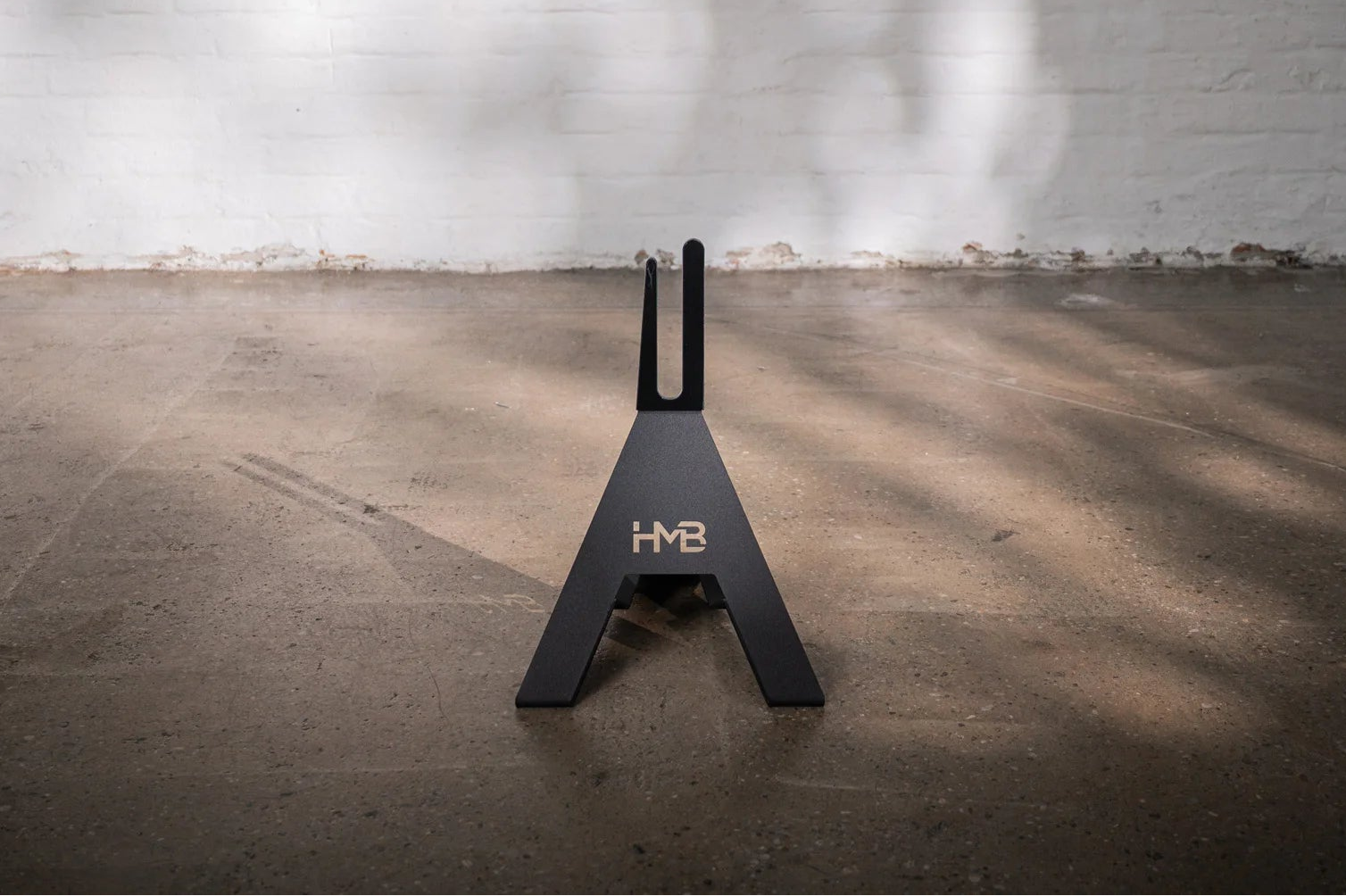
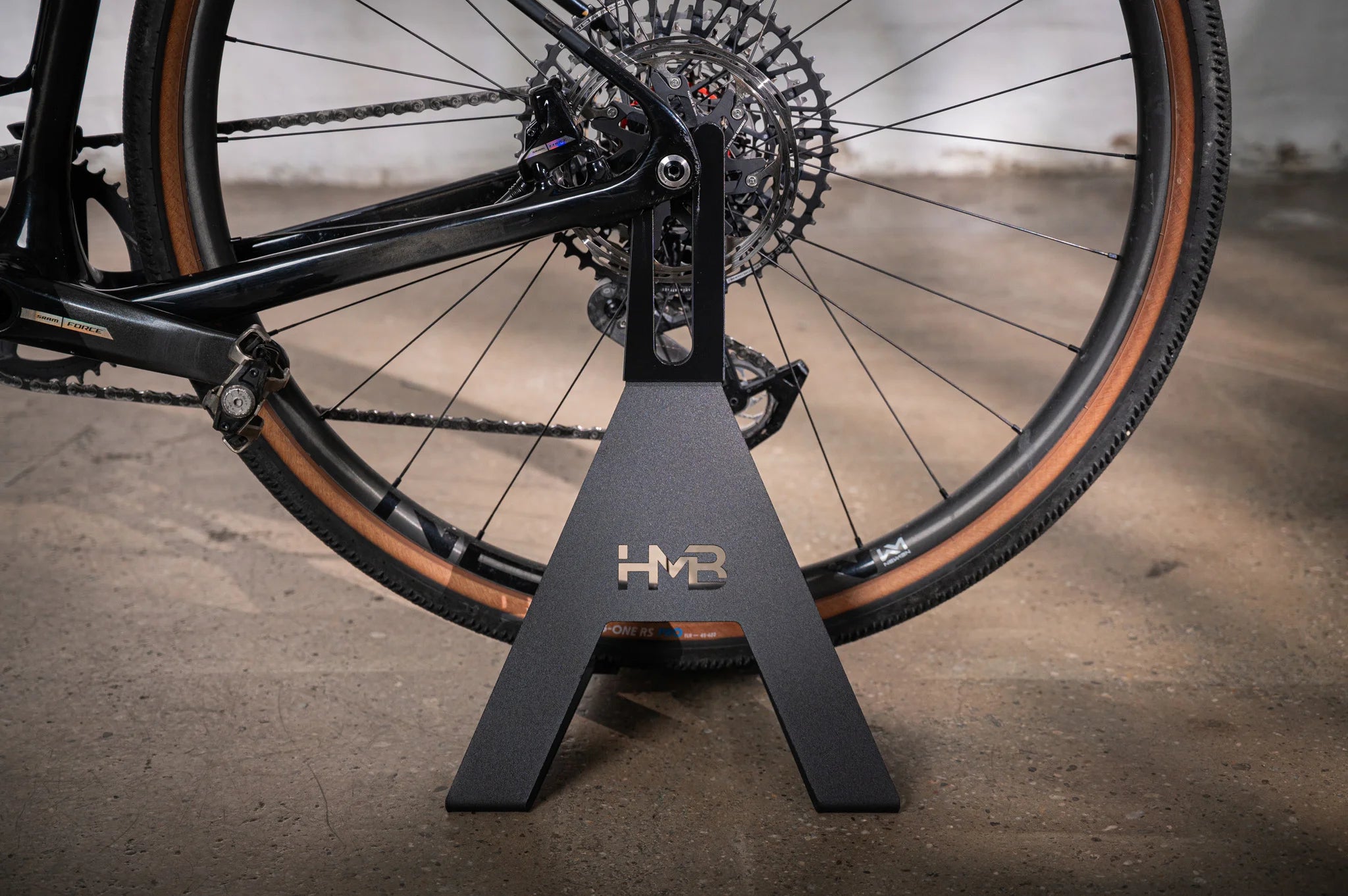
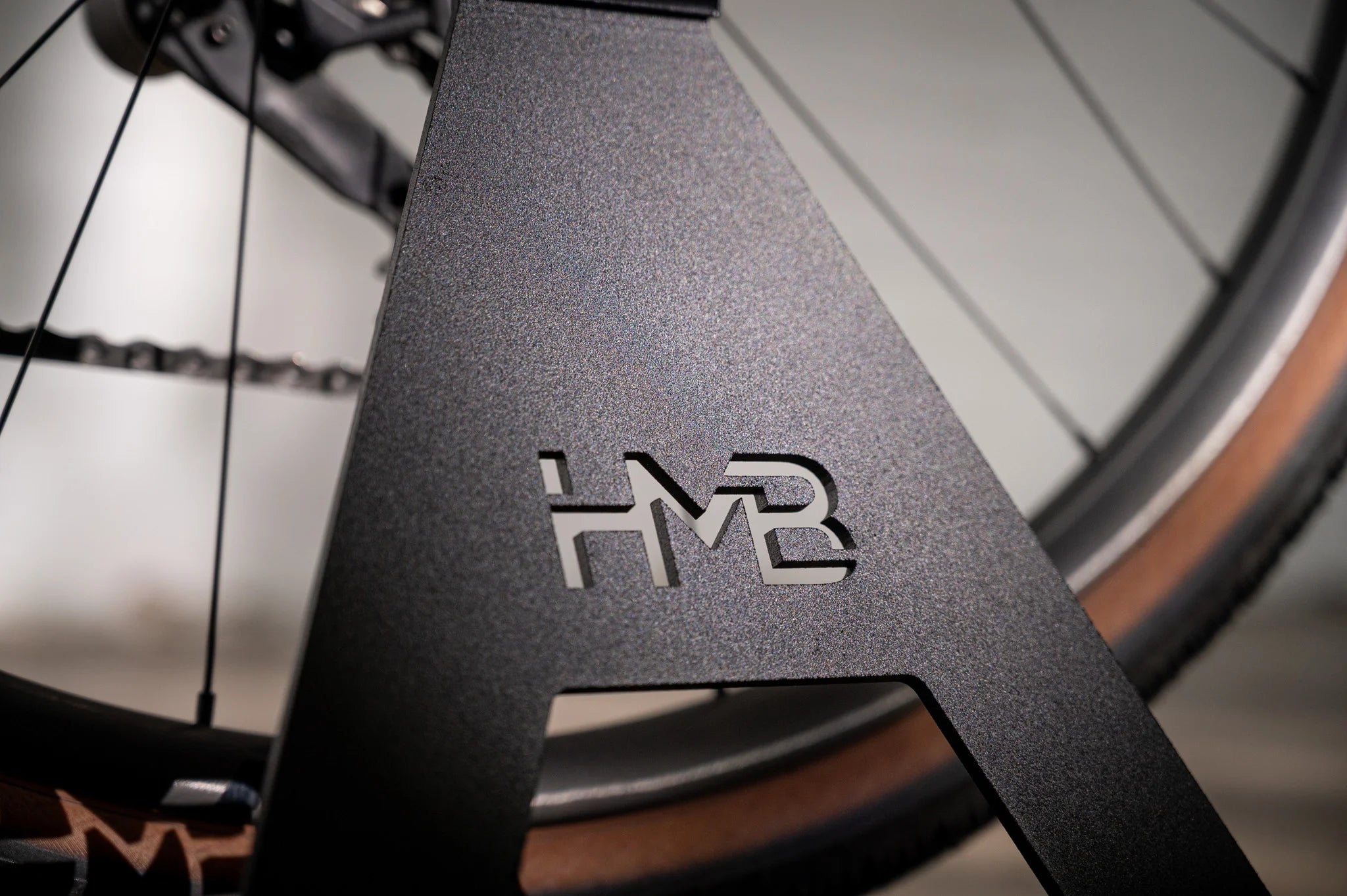
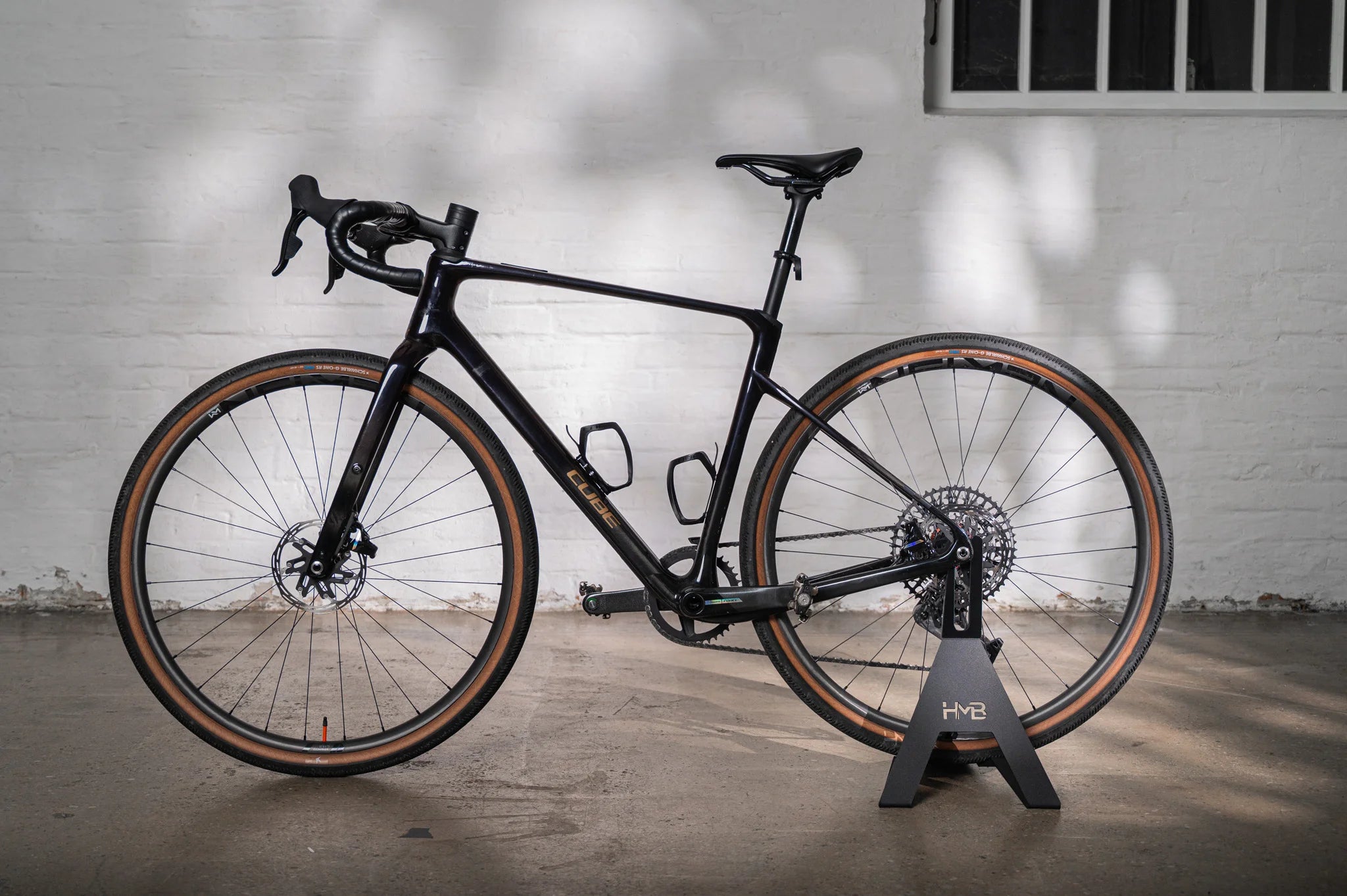
Leaning it in a corner is asking for trouble. It gets knocked over, the rotor bends, the rim picks up dings, and the tyre sits collecting grit. A wall-mounted wheel holder solves the lot: the wheel comes off the floor, stays protected, and is ready to refit the moment you head back outside. The HMB Wheel Mount 12 is built for exactly this, it holds a wheel by its 12 mm thru-axle, or a 5 mm quick-release with the HMB Wheel Mount Adapter 12to5, and it's the tidy answer to the question every indoor rider eventually asks: where does the back wheel go all winter?

If you also run a summer race wheelset you're not touching until spring, get those up on the wall too. Stacked on the floor, rotors bend and rims get dinged; hung properly, they're safe and out of the way. Add the HMB XL Axle and a single mount will hold a full front-and-rear wheelset.

// Keeping the pain cave usable
An indoor setup lives or dies on floor space. You'll be out of the saddle, sweating, shifting your weight around, a stray wheel underfoot is genuinely the last thing you want. The fix is simple: get everything that isn't the trainer or the bike up onto the wall, wheels, spare wheelset, tools, kit, so the floor stays clear.
And mind the sweat. It's salty, and salt is brutal on frames, bolts and bearings over a whole indoor season. Wipe things down after sessions, and don't let a sweaty wheel sit forgotten in the corner until March.
// Coming back out in spring
When the clocks change and the roads finally dry, getting going again should take minutes. Refit the wheel, check the tyre pressures, they'll have dropped, latex fastest, spin the wheels and glance over the brakes and chain, and top the e-bike battery back up.
This is where the earlier effort pays off. A bike put away clean and hung comes straight back down ready to ride. One left dirty on a damp floor needs a workshop session before it's fit for the road, which rather defeats the point of resting it in the first place.
// Do it once, properly
Winter is long, and a bike, or a wheel, or a whole wheelset, put away properly now is one fewer job when the good weather returns. The principle is the same for all of it: off the floor, off the tyres, out of the damp, and up on the wall.
That's what every Hold My Bike mount is built for: 3 mm steel, made in the EU. The Wheel Mount 12 for the wheel that comes off for the turbo, and the bike mounts for the bike that goes up for the season, both ready to hand it all back exactly as you left it.
Greetings from Vienna.