In a small flat, the bike is always in the way. It leans against the hallway wall, blocks the cupboard you need to get into, and catches your shin in the dark. The instinct is to find somewhere to *put* it, but in a small space the floor is the one thing you genuinely can't spare, and most "storage" ideas just move the problem from one bit of floor to another.
The way out is to stop thinking in floor space and start thinking in wall. Here's an honest run through the realistic options for a flat, what each one is actually good at, and where each falls down, because the right answer depends on your flat, your bike, and one question in particular.
// First: can you drill a wall?
This splits the whole field before you start. If you rent, or you're in a listed building, or you simply don't want to make holes, you're pointed towards the freestanding options, and that's a legitimate constraint, not a failure. If you can drill, even with a bit of filler put back on move-out day, the wall opens up everything that follows, including the good-looking end of the range. So answer that first; it saves you agonising over options that aren't really available to you.
// The floor stand
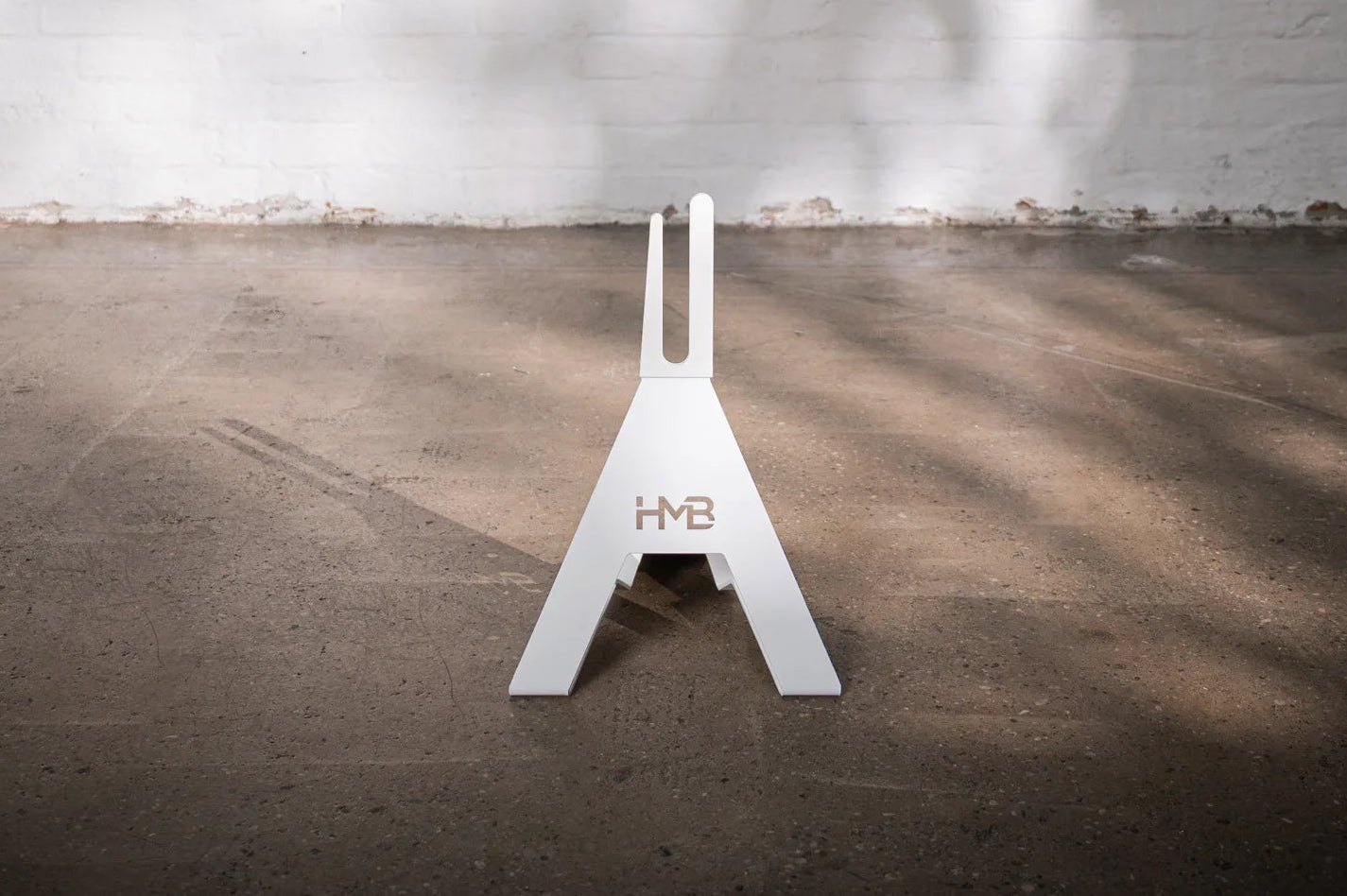
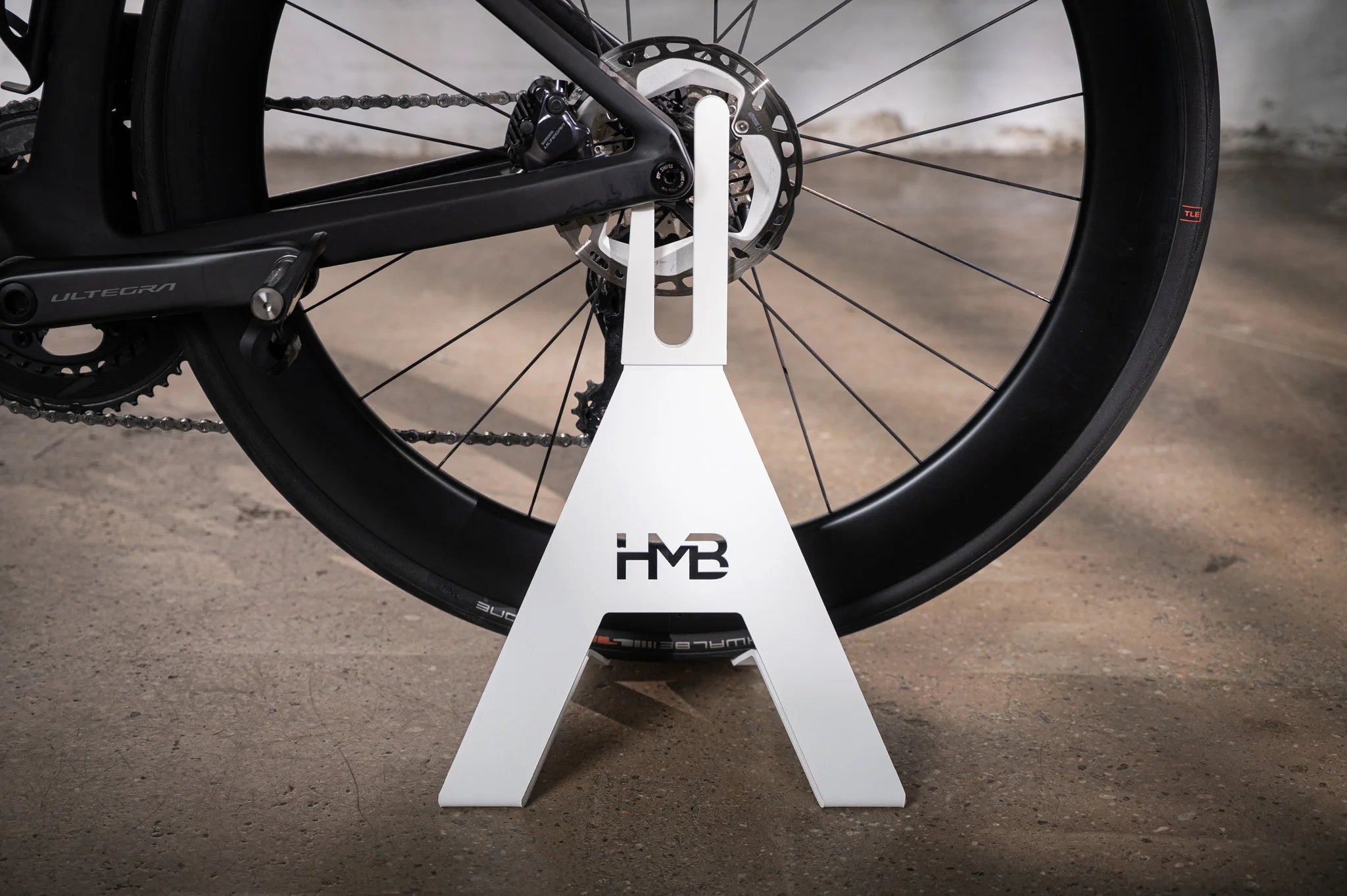
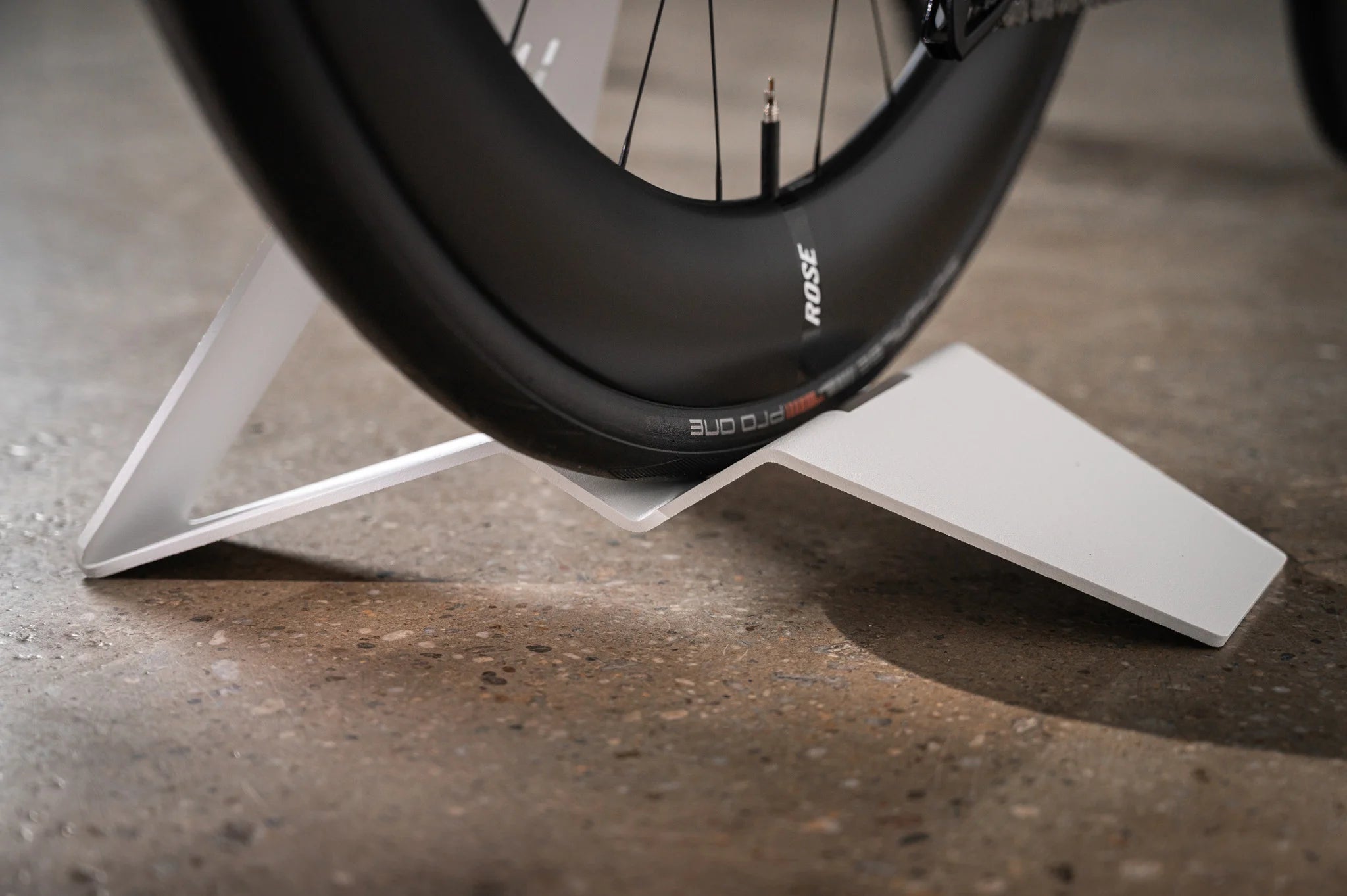
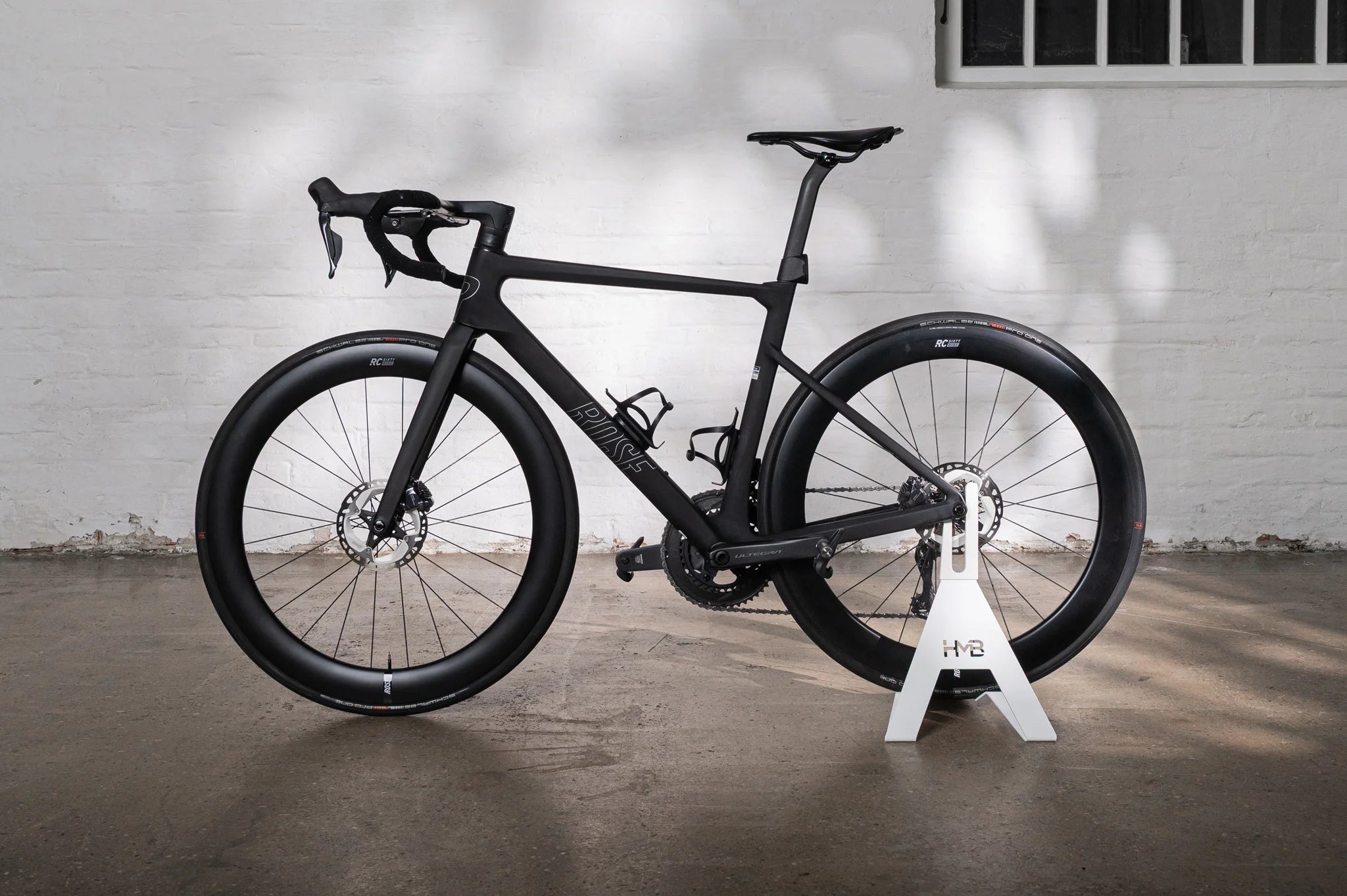
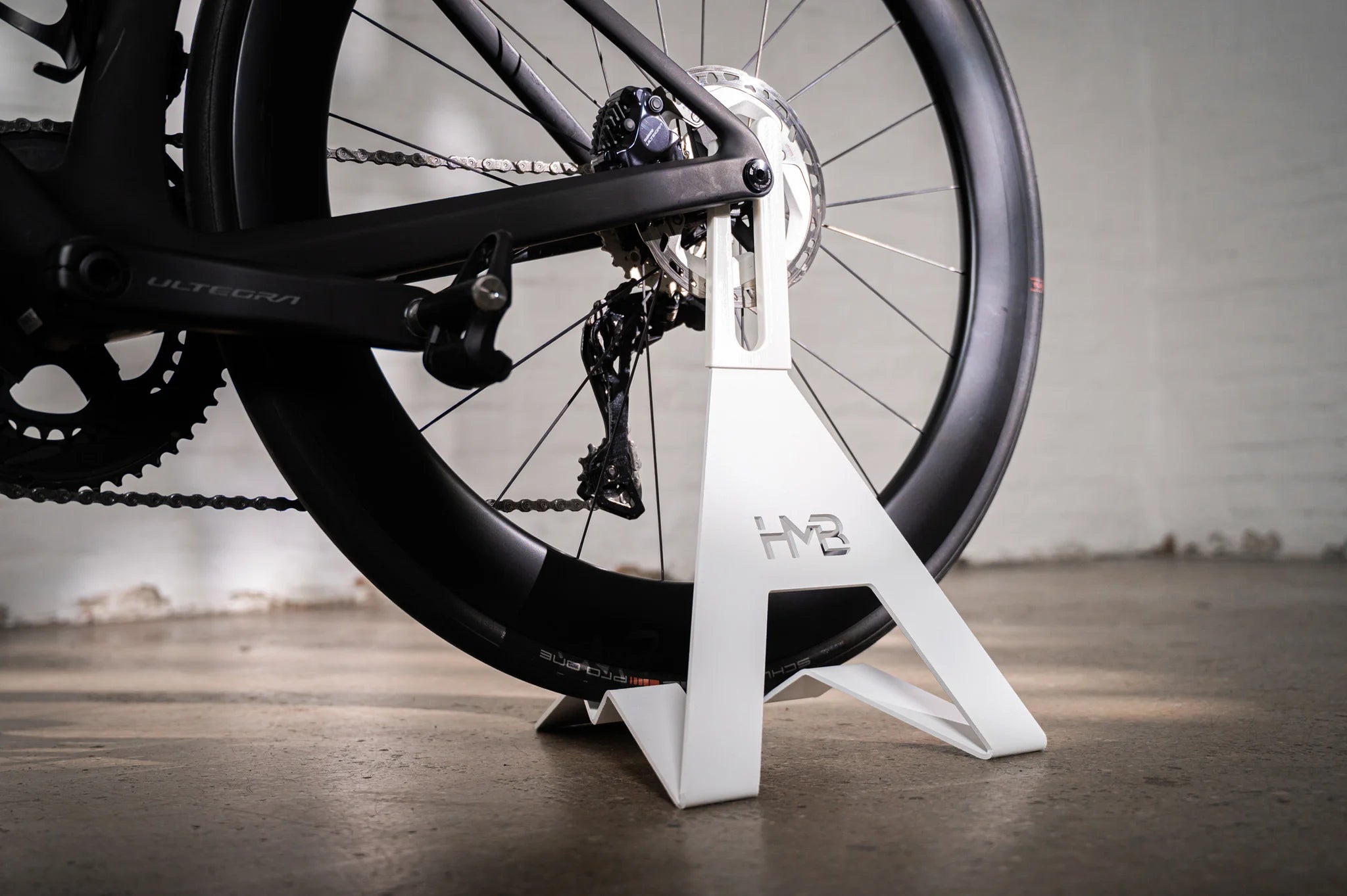
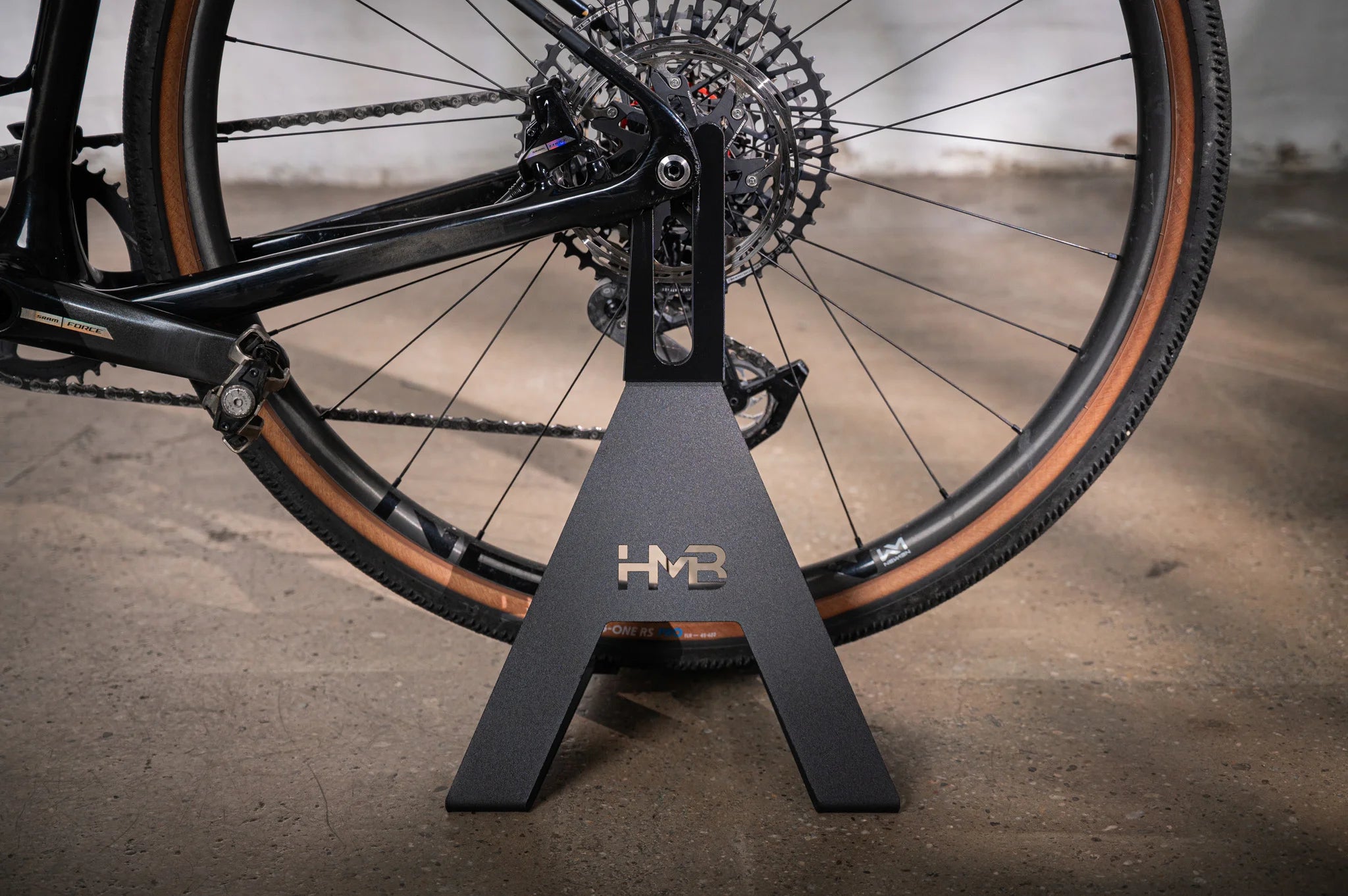
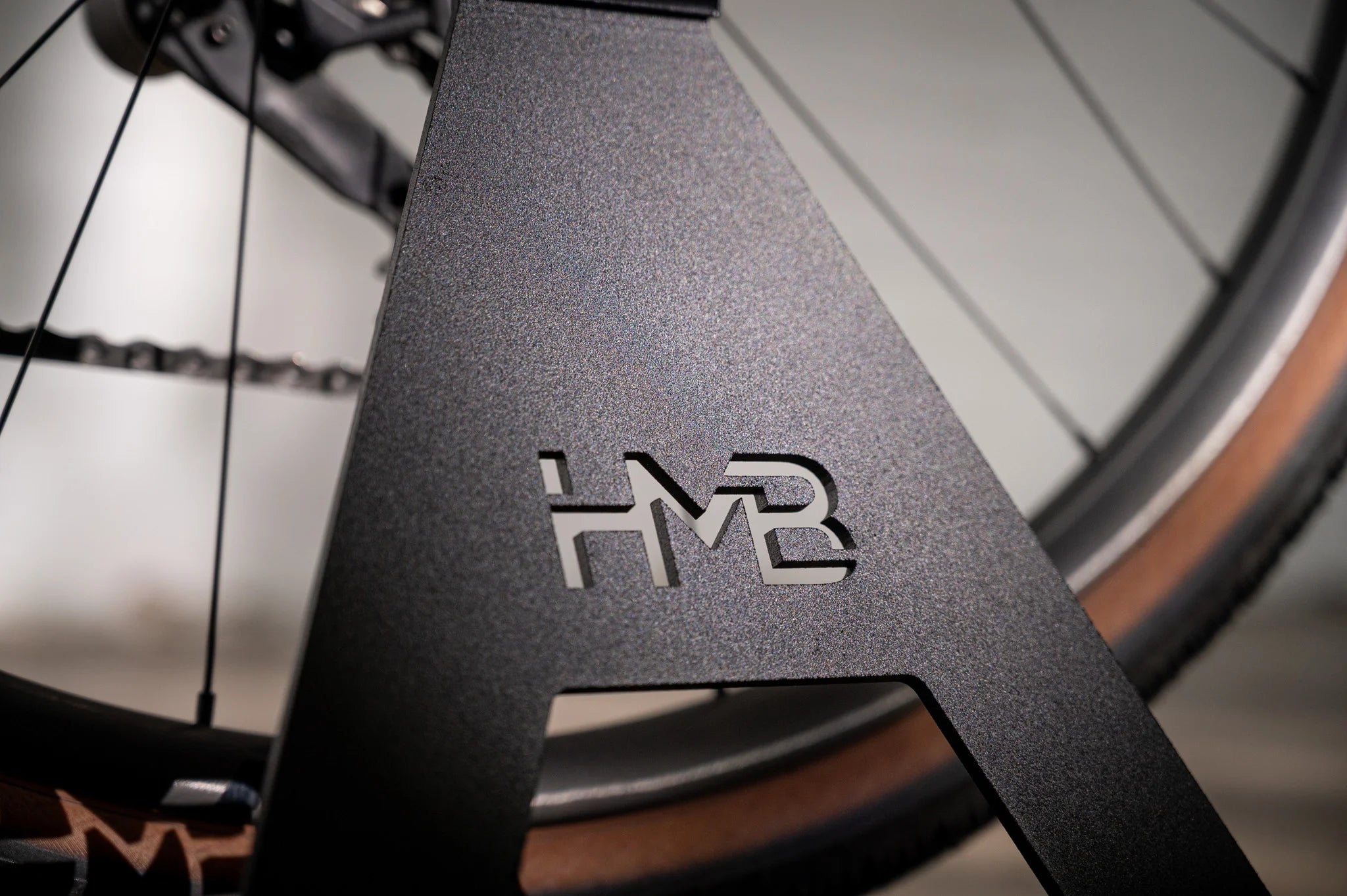
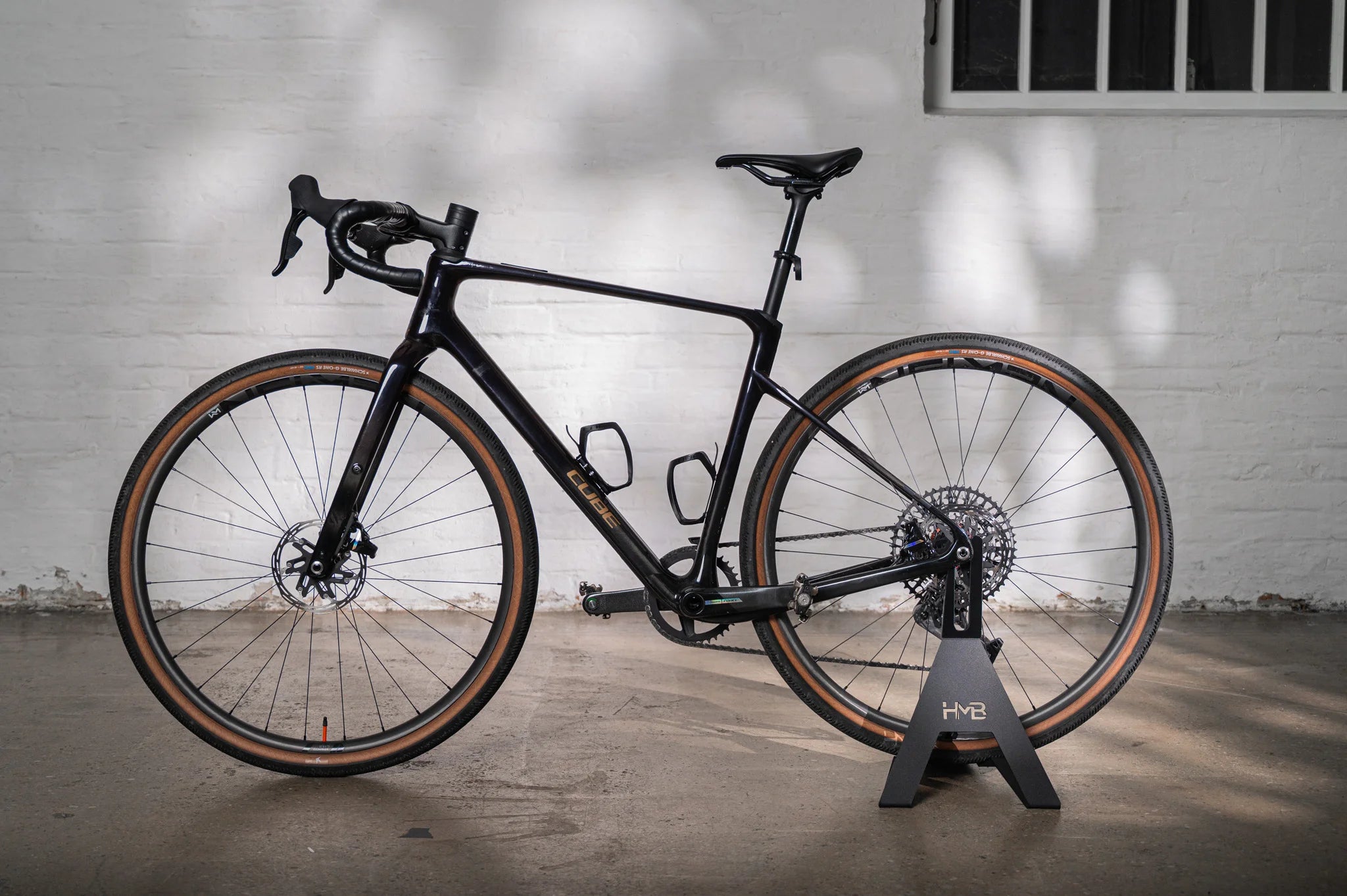
The freestanding floor stand is the default no-drilling answer: a base that either clamps the bike or lets it lean, up and working in seconds, and it moves with you when you go. For a garage or a spare room it's perfectly sensible.
In a small flat it's a harder sell, because it spends your scarcest resource, floor, to save you the trouble of drilling. The footprint is real, the bike still sits at eye level in the middle of the room as a visual presence, and a freestanding stand is the thing most likely to get knocked when someone edges past with the shopping. If the floor is what you're short of, a solution that lives on the floor is working against you.
// The floor-to-ceiling tension pole
A step cleverer: a spring-tensioned pole wedged between floor and ceiling, holding one or two bikes up the vertical plane without a single hole drilled. It uses the height of the room rather than its footprint, and it'll take a second bike, which the floor stand won't.
The catches are practical. It needs a solid ceiling and the right floor-to-ceiling height to tension against, not a given in a modern flat with plasterboard ceilings. Heavier bikes test how confident you feel about a friction fit holding your pride and joy overnight. And, being honest, it tends to read a little "shared student flat" rather than considered, it's a functional object in the room, not a feature of it.
// Hanging vertically, by a wheel
The cheapest wall option is a single hook: the bike hangs nose-up (or down) by a wheel rim, tyre to the wall. Its one great virtue is a narrow footprint, the bike takes up very little wall width, so it's the pick when the only space you've got is a slim strip beside a doorway.
The compromises are the flip side of that. It uses the full height of the wall, so you need the clearance above. All the bike's weight bears down through the rim and spokes, which is fine for a robust commuter and less appealing for a light wheelset. You lift the whole bike up to hook it every single time, which gets old fast with anything heavy, an e-bike especially. And the bike projects into the room by its full width, handlebars and all. It works; it rarely looks like anything other than storage. (We get into this head-to-head properly in our piece on vertical versus horizontal storage.)
// Mounting horizontally, by the frame — the one that also looks good

Here's where storage turns into something you'd actually want on show. A horizontal mount holds the bike flat against the wall by its frame, like a shelf, so the whole bike sits parallel to the floor at whatever height you choose.
It does the practical job completely: the bike is off the floor and out of the walkway, the weight is carried through the frame on padded contact points rather than through the wheels, and because you set the height, lifting it on and off is easy rather than a daily hoist. But the reason it's the answer for a small flat is the bit the other options can't match, a good bike, mounted level and deliberately, stops being clutter and becomes part of the room. It reads as intentional, closer to art than to a bike rack. And with integrated cut-outs for a helmet, shoes and the bits and pieces that otherwise colonise the hallway, the mount earns more of its wall than just holding the bike.
The trade-offs are honest ones. It needs a solid wall and drilling, so it's the committed option, not the renter's quick fix. It projects from the wall by the bike's width, a handlebar and a pedal, so you pick a wall with clearance rather than a busy thoroughfare. And it's one bike per mount.
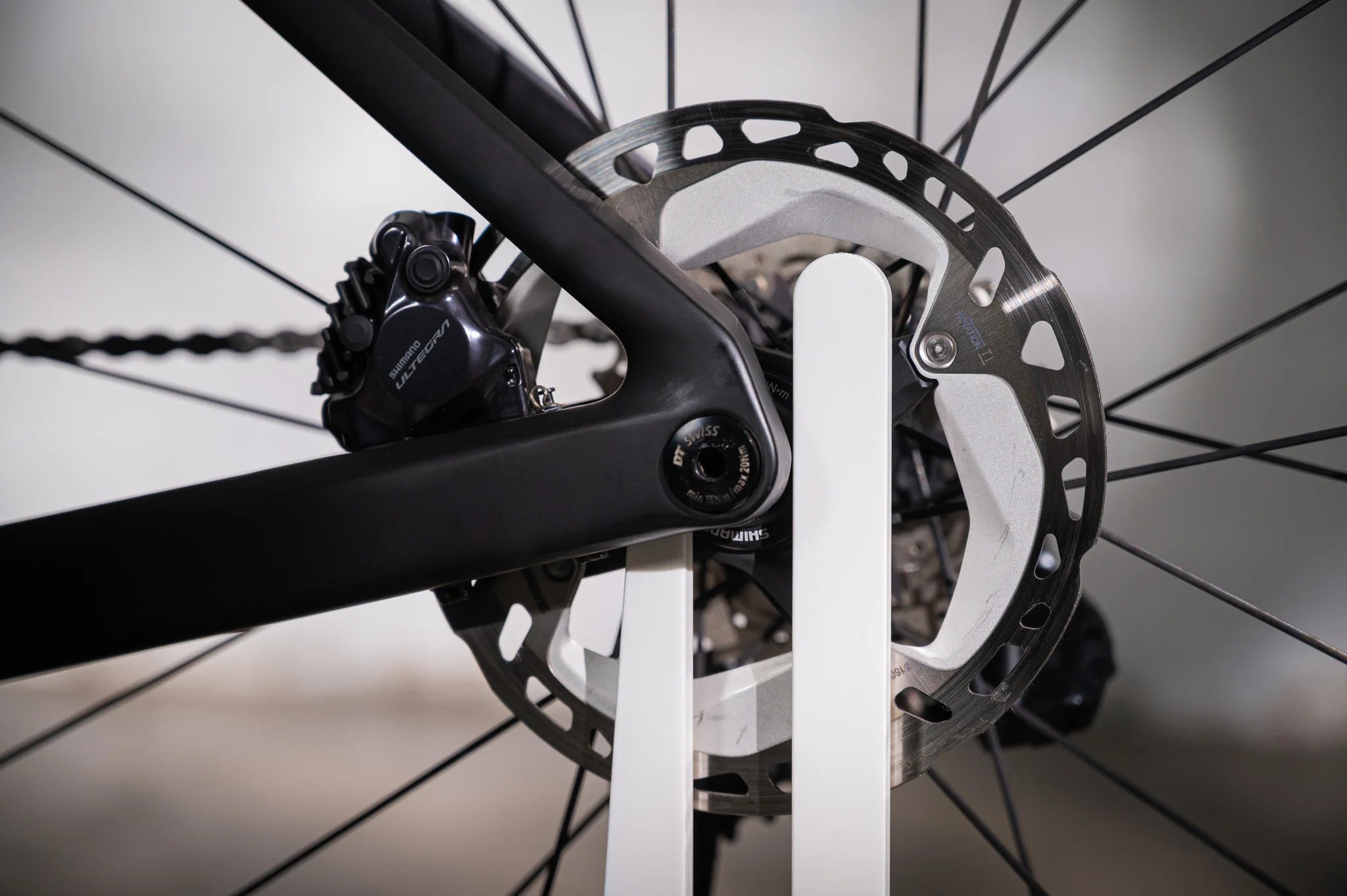
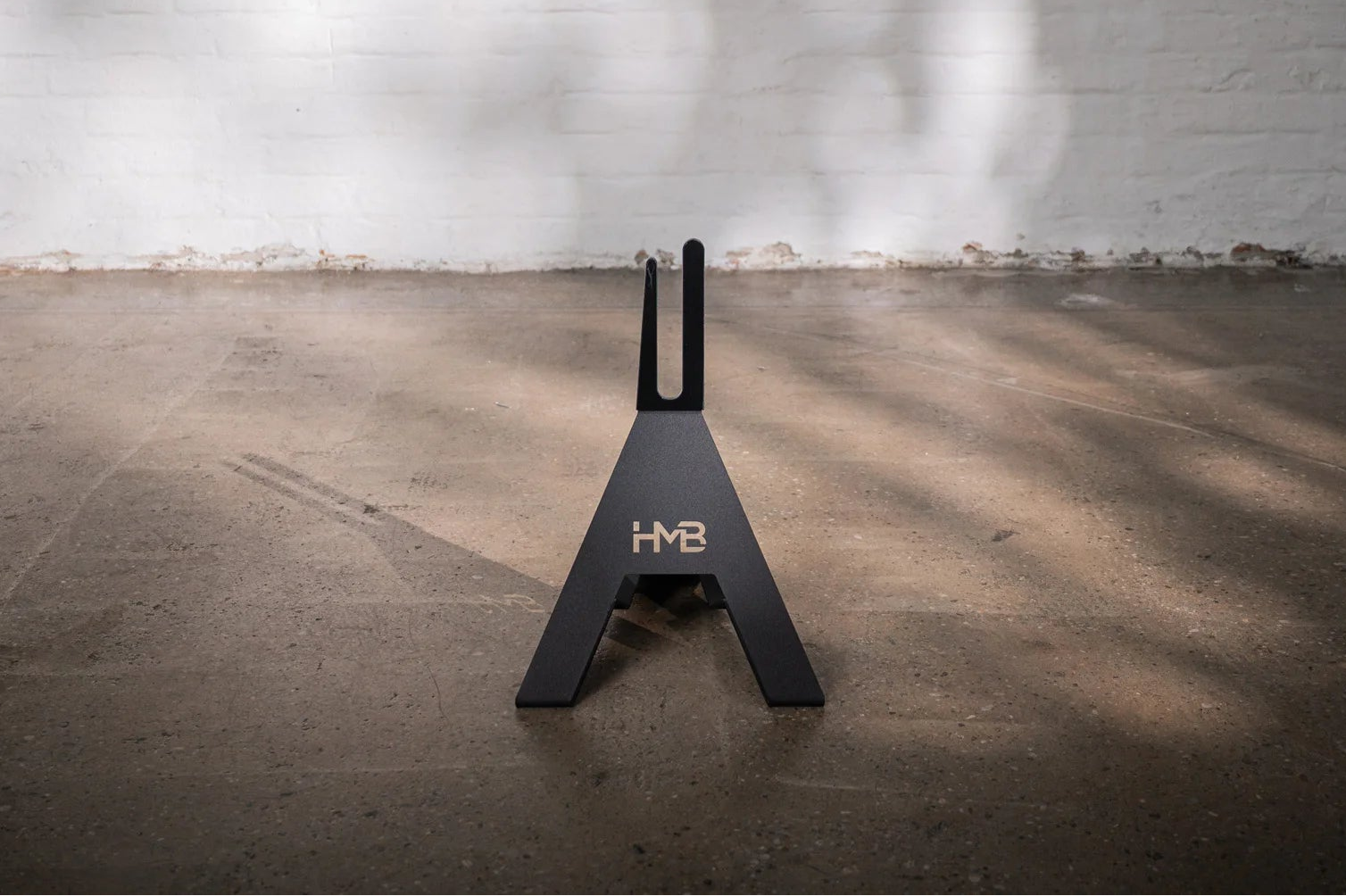
This is the whole idea behind what we build at Hold My Bike: horizontal display in premium steel, the HMB Tilt Mechanism so any frame, sloping top tube and all (hangs perfectly level), anti-slip padding at every contact point, and the option to have your own name or logo laser-cut into the front plate so it's unmistakably yours. In a small flat the bike is going to be visible whatever you do with it. It may as well look like you meant it.
// Making it look intentional
A few small things separate "bike on the wall" from "that looks great". Set the height to suit the purpose: roughly eye level if you're displaying a bike you're proud of, lower if it's a heavy e-bike you lift on and off daily. Choose a wall the bike actually suits, above a sideboard, along a hallway, a feature wall behind the sofa, and leave clearance for the bars and a pedal to sit proud without catching anyone. Keep the area around it fairly clear, so the bike is the object rather than one more thing in a busy corner. And if you own several bikes, one really good one on display beats three crammed in; rotate which one's up as the mood, or the season, takes you.
// The honest answer
If you can't drill or you move often, a floor stand or a tension pole is the pragmatic choice, and you accept the footprint as the price of not making holes. If you can drill and you want the bike genuinely gone from the floor, it goes on the wall, vertically by a wheel if the only space is a narrow strip and looks don't matter, horizontally by the frame if you want it off the floor *and* looking like it belongs there.
That last one is what every Hold My Bike mount is built for: 3 mm steel, made in the EU, engineered so the bike you spent good money on gets to look the part, off the floor, out of the way, and part of the room rather than in the way of it.
Greetings from Vienna.